Blog
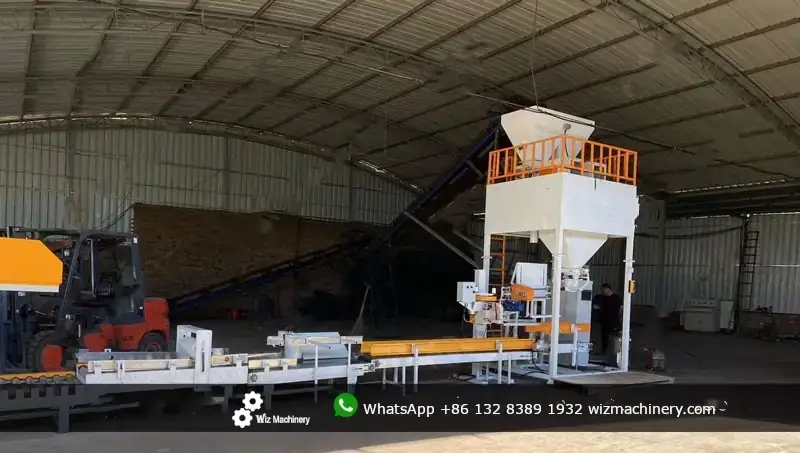
Single Weigher vs Dual Weigher Bagging Machine: Which Is Right for You?
When selecting an open-mouth bagging machine, one of the most important decisions is choosing between a single weigher and a dual weigher configuration.
Both systems are widely used in industrial packaging, but they differ significantly in:
-
Production speed
-
Investment cost
-
Throughput efficiency
-
Return on investment (ROI)
-
Suitable applications
In this guide, we break down the differences in detail so you can confidently choose the right system for your production line.
What Is a Single Weigher Bagging Machine?
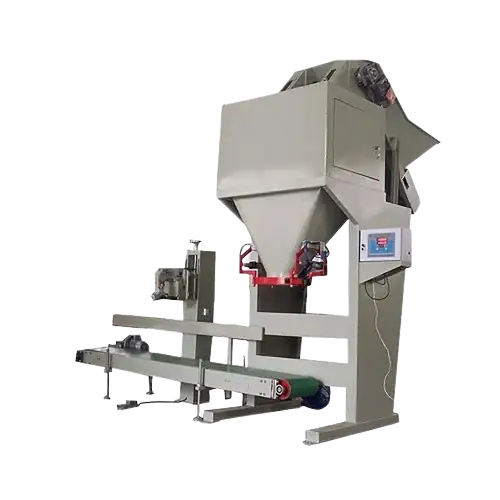
A single weigher bagging machine uses one weighing hopper to measure and discharge the product into each bag.
The process works in a sequential cycle:
-
Weigher fills to target weight
-
Product discharges into bag
-
Weigher resets
-
Next cycle begins
This makes it reliable, accurate, and cost-effective.
What Is a Dual Weigher Bagging Machine?
A dual weigher bagging machine uses two weighing hoppers working alternately.
While one hopper is discharging product into a bag, the second hopper is simultaneously preparing the next weight.
This overlapping cycle dramatically increases output.
Side-by-Side Comparison
| Feature | Single Weigher | Dual Weigher |
|---|---|---|
| Typical Output | 100–300 bags/hour | up to 400 bags/hour |
| Investment Cost | Lower | Higher |
| Footprint | Compact | Slightly larger |
| ROI Speed | Moderate | Faster for high volume |
| Best For | Small–mid operations | Large-scale production |
Production Speed Comparison
Single Weigher
Ideal for:
-
10kg–25kg bags
-
Moderate output requirements
-
Small to mid-sized facilities
Dual Weigher
Ideal for:
-
High-volume packaging
-
Export-scale production
-
Operations up to 400 bags/hour
For example:
A charcoal producer packaging 10kg bags may achieve:
-
~250 bags/hour with single weigher
-
~400 bags/hour with dual weigher
Cost & ROI Considerations
Initial Investment
Single weigher machines cost less upfront due to:
-
Fewer components
-
Simpler control system
-
Lower structural requirements
Dual weighers require:
-
Two weighing systems
-
More advanced PLC programming
-
Stronger frame construction
Return on Investment (ROI)
If your plant runs:
-
8+ hours daily
-
High production demand
-
Export-level output
Then dual weigher machines typically achieve ROI faster through:
-
Increased daily output
-
Lower labour cost per bag
-
Reduced bottlenecks
However, for lower production volumes, single weigher systems often provide the best balance of cost and performance.
Application-Specific Recommendations
Charcoal Packaging
-
Single weigher → suitable for small-scale producers
-
Dual weigher → ideal for exporters targeting up to 500 bags/hour
Animal Feed & Grain
-
Single weigher → regional suppliers
-
Dual weigher → commercial feed mills
Chemicals & Fertilisers
-
Dual weigher recommended for large batch processing
Case Study: Fertiliser Plant Upgrade
Situation
A fertiliser manufacturer was producing 200 bags/hour using a single weigher system.
Challenge
Production demand increased by 80%.
Solution
They upgraded to a dual weigher open-mouth bagging machine.
Results
-
Output increased to 480 bags/hour
-
Labour cost per bag reduced
-
Payback achieved in 16 months
When Should You Choose Single Weigher?
Choose single weigher if:
-
Your target is 200–300 bags/hour
-
You are budget-conscious
-
You have limited factory space
-
You run shorter production shifts
When Should You Choose Dual Weigher?
Choose dual weigher if:
-
You require up to 400 bags/hour
-
You operate continuous production
-
You want faster ROI
-
You anticipate future expansion
Frequently Asked Questions
Is dual weigher more accurate?
Both systems provide high accuracy. Dual weighers increase speed, not necessarily precision.
Does dual weigher require more maintenance?
Maintenance requirements are slightly higher due to additional components, but modern systems are designed for durability.
Can I upgrade from single to dual later?
In many cases, yes — but it depends on machine frame design. Always consult your supplier early.
Final Thoughts
The decision between a single and dual weigher bagging machine ultimately depends on:
-
Required production rate
-
Budget
-
Long-term expansion plans
-
Labour availability
For moderate production (200–300 bags/hour), single weigher systems are highly efficient.
For large-scale operations requiring up to 400 bags/hour, dual weigher machines provide superior throughput and faster ROI.
Featured Thinking