Debagging Machines

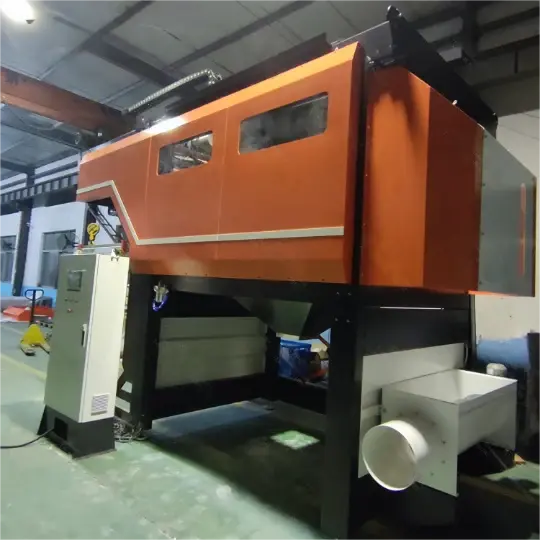
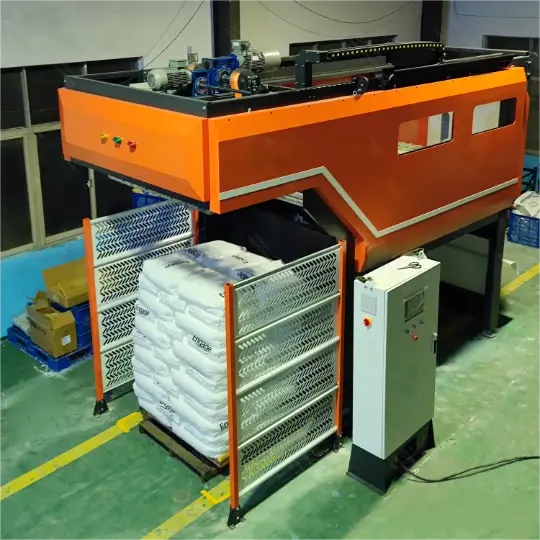
Layer By Layer Debagging Machine

Efficient layer-by-layer debagger for bulk material handling.
Certification

Debagging Machines

Layer By Layer Debagging Machine

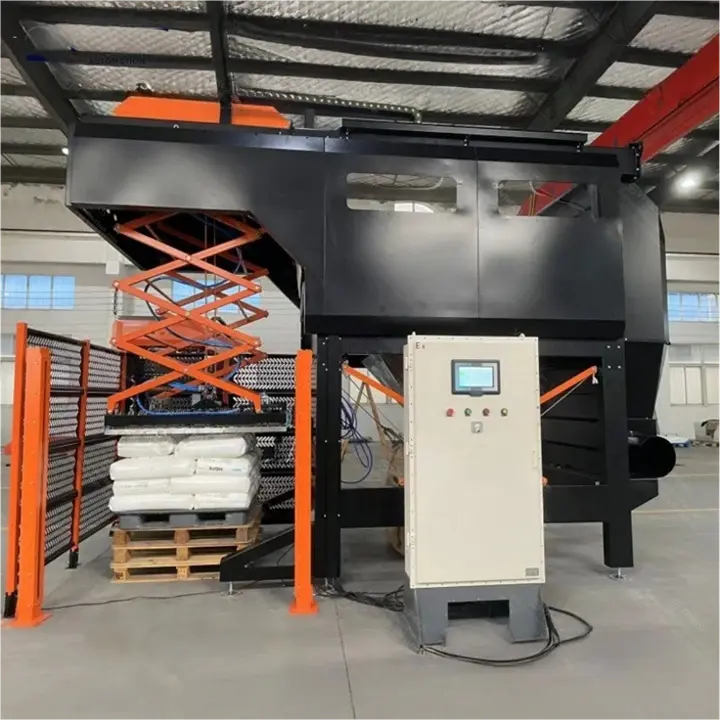
The Layer-by-Layer Debagging Machine handles a complete layer of bags, opens the packaging and discharges the contents through a lower outlet. Empty bags are separated and collected through a dedicated exit.

Its listed capacity is 400–600 bags per hour. Full-layer handling should be assessed against consistent bag dimensions, pallet stacking patterns, material flow and the capacity of the receiving process. Actual output depends on the complete installation and the bags being handled.

For bagged powders and granules, confirm the opening method, material contact surfaces, cleaning and dust-extraction requirements before ordering. Compare full-layer and individual-bag debagging systems, or request an assessment using your pallet and bag details.

0

bags/hr (up to)

Process flow

1. Bag Layer Gripping

The machine grips an entire layer of bagged material using its automatic handling system.

2. Positioning for Debagging

The gripped bags are positioned precisely for the opening process.

3. Bag Opening

Each bag is automatically opened to release its contents.

4. Material Discharge

The contents flow out smoothly through the bottom discharge outlet for further processing or storage.

5. Bag Separation

The system separates the empty bags from the discharged material without manual intervention.

6. Waste Bag Collection

The empty bags are automatically transferred to the collection unit and expelled through a dedicated outlet.

Features

Highly Integrated System

Combines automatic conveying, bag opening, and the collection of trays and empty bags into one streamlined unit.

User-Friendly Operation

Equipped with intelligent PLC control, adjustable unpacking speed, and automatic fault alarms for smooth and efficient performance.

Automatic Waste Bag Collection

Features a built-in collector that gathers and compresses empty bags without manual handling.

Efficient Dust Control

Designed for dust extraction at the bag-opening and discharge stages. Confirm the extraction arrangement and capacity against your material and installation requirements.

Customisable Configuration

Can be tailored to meet specific production requirements and site conditions.

Improved Workflow Efficiency

Reduces manual labour, increases throughput, and ensures continuous operation with minimal downtime.

Specifications

Specification Layer-by-Layer Debagging Machine
Model WM - LBL800
Handling Capacity 400–600 bags/hour
Emptying Rate Approximately 99.9%
Machine Power 15 kW / 380V
Air Consumption 150 L/min at 0.6 MPa
Equipment Weight 3.5 tonnes
Equipment Material Carbon steel (main frame) / 304 stainless steel (contact parts)
Note Technical parameters may vary based on equipment specifications.

First ever packaging machine questionnaire

Which machine do you need?

Take our quick questionnaire to discover which bagging machine fits your needs. For an exact match and pricing, a detailed quote will be required.
FAQ

When should I consider layer-by-layer debagging?

Consider full-layer handling when assessing higher-volume bag emptying with consistent bag dimensions and pallet stacking patterns. This model is listed at 400–600 bags/hour, but the material must empty reliably and the downstream process must accept the discharge rate. If bags or pallet layers vary, compare an individual-bag robot arrangement before selecting. Compare the three debagging configurations.

How does the layer-by-layer bag emptying process work?

The handling system grips a complete bag layer and positions it for opening. The bags are opened, material discharges through the lower outlet, and empty packaging is separated and collected through its dedicated exit. The quotation should define how layers are presented, how packaging is separated, and how material and waste bags leave the system.

What material and bag information is needed before selecting this machine?

Provide the material name, bulk density, moisture and flow characteristics, bag construction, any inner liner, filled weight and dimensions. Include pallet size, bags per layer, layer orientation and target output. Confirm that the proposed arrangement can handle your full layer and separate packaging from discharged material. Review contact surfaces and cleaning requirements for the intended product.

What power, compressed air and installation requirements are listed?

The listed specification is 15 kW / 380 V, with air consumption of 150 L/min at 0.6 MPa and equipment weight of 3.5 tonnes. Confirm the final utility schedule for your configuration. The layout must also allow pallet access, full-layer handling, guarding, maintenance, receiving equipment and the required dust-extraction connection. Ask for a layout drawing before confirming the installation.

Is the approximately 99.9% emptying rate guaranteed for every material?

No universal result should be assumed from a nominal specification. The page lists an approximate 99.9% emptying rate; actual residual material depends on the product flow, moisture, bag construction, liner and operating settings. Agree an acceptance test using representative filled bags, including how residual material and packaging separation will be measured.

What is your production and delivery time?

The typical production cycle for our equipment is approximately 10-30 working days, depending on the machinery. Once production is completed, you can either visit our factory for an inspection or request photos and videos of the finished products.
We offer various transportation options, including rail, sea, and combined (sea and rail) transport. Delivery times vary by region:
* Southeast Asia: 7-15 days
* Central Asia: 20-30 days
* Middle East: 20-40 days
* Africa & Americas: 30-50 days
* Russia & Europe: 25-40 days
We also provide detailed photos and videos of the loading process, along with complete information regarding equipment declaration and customs clearance.

What is the warranty for the machine?

The warranty period of our equipment is 12 months, usually it takes about 30 days (1 month) from China to the customer's place, and the installation and commissioning time also takes about 30 days (1 month), so the warranty period is extended to 18 months from the date delivery (excluding wearing parts). We will provide customers with the necessary wear parts upon delivery of the goods. If there are any quality problems during the warranty period, we will fix the problem as soon as possible. If the parts need to be replaced, we will deliver them to the customer by air, and we will take care of all costs.

Can engineers be sent to the site for installation and equipment debugging?

Depending on the machinery, we will send an engineer to your facility to assist with machine installation and provide training for your staff on its operation. We will also provide installation instructions for the production line, layout drawings, assembly drawings, etc. If the customer has his own engineer, he can install the equipment according to the installation drawings, and we can also guide the installation. The customer is responsible for covering round-trip airfare, accommodation, and a fee of USD 150 per day per person. The duration of the visit will depend on the machines ordered, typically ranging from 7 to 30 days.

What certificates do you have?

We hold ISO 9001 certifications for environmental protection and quality management systems. Additional certifications, such as SGS and EAC, can be provided based on the requirements of the customer's country.

What are your payment terms?

Payment ≦ 5000 USD, 100% in advance. Payment ≥ 5000 USD, 30% T/T in advance, balance before shipment.

Can you produce customized equipment based on our requirements?

Yes, we can manufacture customised equipment tailored to your specific needs. Since end users best understand the challenges they face during operation, we welcome customer feedback and continuously improve our machines based on those insights.