
Debagging Machines

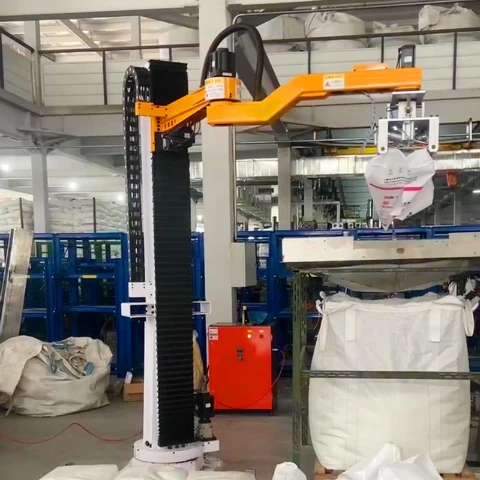
Column Robot Debagging Machine

Compact robotic debagger for efficient, precise material handling.
Certification

Debagging Machines

Column Robot Debagging Machine

The Column Robot Debagging Machine automatically handles one bag at a time, transfers it to the opening station and discharges the material into a receiving hopper, conveyor or process. Empty packaging is collected separately.

With a maximum handling load of 50 kg and output of up to 120 bags per hour, it is an option for plants assessing a compact automatic bag emptying system. Actual output depends on bag construction, material flow, pallet presentation and the selected configuration.

Discuss your powder or granular material, bag dimensions and factory layout before selection. Watch the column robot demonstration, compare the three debagging systems or request an application assessment.

0

bags/hr

0

kg max load

0

mm motion range

Process flow

1. Bag Detection

Sensors identify individual bag positions on the pallet or conveyor system.

2. Single Bag Gripping

The robotic arm grips one bag at a time using its end-effector.

3. Bag Transfer

The bag is moved from the pallet to the cutting or opening area.

4. Bag Opening

The machine automatically cuts or opens the bag to release the material inside.

5. Material Discharge

The contents are emptied through a discharge chute into the next processing stage (e.g., hopper, mixer).

6. Empty Bag Collection

The empty bag is transferred to the waste collection unit for compression or disposal.

Features

High Efficiency

Handles up to 120 bags per hour. Actual throughput depends on bag construction, material flow characteristics and the selected system configuration.

Advanced Intelligence

Utilises modern sensors and control systems to perform unpacking tasks with exceptional speed, accuracy, and consistency.

Flexible Handling Options

Compatible with various gripping tools—including suction cups, grippers, and clamps—making it adaptable to different package types, shapes, and sizes.

Enhanced Safety

Features intelligent monitoring, obstacle detection, and comprehensive safety systems to protect both operators and products during operation.

Reliable Operation

Designed for long-term use with minimal maintenance, ensuring consistent and dependable performance across different industrial applications.

Compact Design

Space-saving structure requires only 3 to 5 square metres of installation area, making it ideal for facilities with limited floor space.

Specifications

Specification Column Robot Debagging Machine
Model WM-CRDB70
Handling Capacity up to 120 bags per hour
Voltage 380V, 50Hz or 60Hz
Air Supply Pressure 0.5–0.8 MPa
Maximum Load Capacity 50 kg
Machine Dimensions (L × W × H) 2750*950*3250mm
Net Weight Approximately 950 kg
Application Scope Food Industry: Flour, sugar, and flavourings
Pharmaceutical Industry: Raw materials for pharmaceuticals
Chemical Industry: Chemical raw materials, powders, and granular materials
Agriculture and Feed Industry: Feed, seeds, and fertilisers
Note The above technical specifications may vary depending on equipment configuration.

First ever packaging machine questionnaire

Which machine do you need?

Take our quick questionnaire to discover which machine fits your needs. For an exact match and pricing, a detailed quote will be required.

FAQ

What information is needed to quote a column robot debagging system?

Provide the material name, bag material and dimensions, filled bag weight, required bags per hour, pallet size and stacking pattern, and available installation space. Include the discharge height and details of the receiving hopper, conveyor or mixer. These requirements help define the handling, opening and discharge configuration for your quotation.

How does the column robot empty and collect bags?

The system detects the bag position, grips one bag and transfers it to the opening area. The bag is opened and its contents discharge into the receiving equipment. The empty bag then moves to the waste collection unit. The quotation should specify the opening method, downstream connection and empty-bag handling arrangement for the selected configuration.

Watch the column robot debagging demonstration to see the handling sequence, or compare automatic debagging systems.

Which materials and bags should be assessed for column robot debagging?

The product range includes applications such as flour, sugar, feed, fertilisers, chemical powders and granules. Suitability depends on material flow, moisture, dust behaviour and the bag construction. Send filled bag weight, dimensions and details of any inner liner so the gripping, opening, material discharge and empty-bag separation can be assessed. Confirm contact materials and cleaning requirements for your product; an industry listing alone does not establish suitability.

What utilities and installation space does the column robot require?

The listed specification is 380 V at 50 Hz or 60 Hz, with compressed air at 0.5–0.8 MPa. The machine dimensions are 2750 × 950 × 3250 mm. These dimensions do not include all pallet access, guarding, maintenance clearance, dust extraction and receiving equipment. Request a layout and utility schedule for the selected configuration, including air consumption, discharge height and the connection to your hopper or conveyor.

How does a column robot compare with robotic arm and layer-by-layer debagging?

The column robot handles individual bags and is listed at up to 120 bags/hour with a maximum handling load of 50 kg. The robotic arm model also handles individual bags and is listed at 200–300 bags/hour. The layer-by-layer model handles complete layers and is listed at 400–600 bags/hour. Compare these figures with your pallet pattern, bag construction, material flow and downstream capacity rather than selecting on nominal output alone. Compare debagging machine configurations.

What is your production and delivery time?

The typical production cycle for our equipment is approximately 10-30 working days, depending on the machinery. Once production is completed, you can either visit our factory for an inspection or request photos and videos of the finished products.
We offer various transportation options, including rail, sea, and combined (sea and rail) transport. Delivery times vary by region:
* Southeast Asia: 7-15 days
* Central Asia: 20-30 days
* Middle East: 20-40 days
* Africa & Americas: 30-50 days
* Russia & Europe: 25-40 days
We also provide detailed photos and videos of the loading process, along with complete information regarding equipment declaration and customs clearance.

What is the warranty for the machine?

The warranty period of our equipment is 12 months, usually it takes about 30 days (1 month) from China to the customer's place, and the installation and commissioning time also takes about 30 days (1 month), so the warranty period is extended to 18 months from the date delivery (excluding wearing parts). We will provide customers with the necessary wear parts upon delivery of the goods. If there are any quality problems during the warranty period, we will fix the problem as soon as possible. If the parts need to be replaced, we will deliver them to the customer by air, and we will take care of all costs.

Can engineers be sent to the site for installation and equipment debugging?

Depending on the machinery, we will send an engineer to your facility to assist with machine installation and provide training for your staff on its operation. We will also provide installation instructions for the production line, layout drawings, assembly drawings, etc. If the customer has his own engineer, he can install the equipment according to the installation drawings, and we can also guide the installation. The customer is responsible for covering round-trip airfare, accommodation, and a fee of USD 150 per day per person. The duration of the visit will depend on the machines ordered, typically ranging from 7 to 30 days.

What certificates do you have?

We hold ISO 9001 certifications for environmental protection and quality management systems. Additional certifications, such as SGS and EAC, can be provided based on the requirements of the customer's country.

What are your payment terms?

Payment ≦ 5000 USD, 100% in advance. Payment ≥ 5000 USD, 30% T/T in advance, balance before shipment.

Can you produce customized equipment based on our requirements?

Yes, we can manufacture customised equipment tailored to your specific needs. Since end users best understand the challenges they face during operation, we welcome customer feedback and continuously improve our machines based on those insights.

Can I discuss a column robot debagging project in English?

Yes. Our fluent English support reduces communication gaps, makes the proposed specifications and quotation clear and transparent, and helps your project progress smoothly from enquiry through machine selection to delivery. We explain the bag-handling method, material requirements and downstream connections directly. Send your debagging requirements in English.