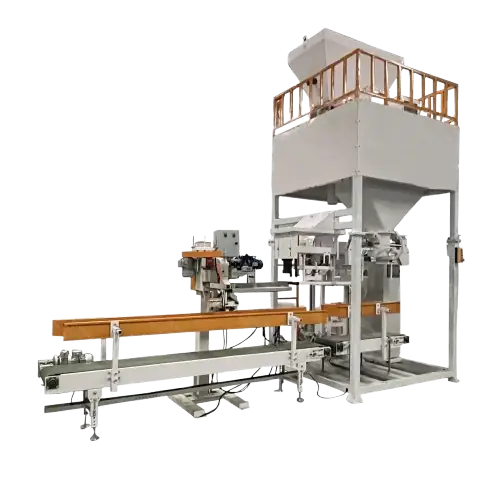
Column-Robot-Debagging-Machine front

The Shift from Manual to Robotic Debagging

In many manufacturing plants, manual bag emptying is still a hidden bottleneck. Operators cut open 25 kg or 50 kg bags, lift them repeatedly, deal with dust clouds, and struggle to maintain consistent feeding rates. As production volumes grow and safety regulations tighten, this traditional method becomes inefficient, unsafe, and costly.

To solve these challenges, industries are rapidly adopting Column Robot Debagging Machines — a modern, automated solution that replaces manual sack emptying with robotic precision, dust-free operation, and high throughput.

This article explains what a column robot debagging machine is, how it works, where it is used, and why it has become a preferred solution across multiple industries.

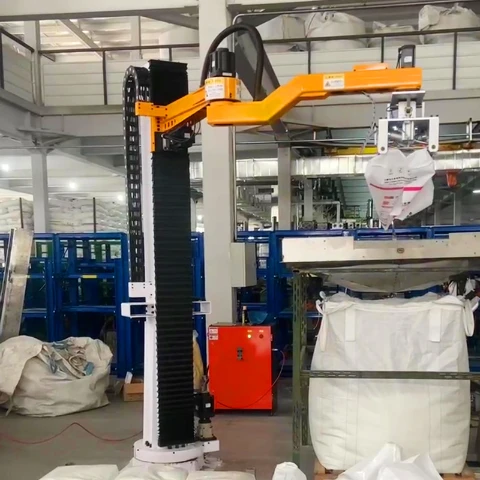
What Is a Column Robot Debagging Machine?

A Column Robot Debagging Machine is an automated robotic system designed to open, empty, and dispose of industrial bags containing bulk materials such as powders, granules, or pellets.

Unlike fixed or manual debagging stations, this system uses a column-mounted robot that moves vertically and horizontally to:

  • Pick bags from pallets or conveyors

  • Open or slit the bags safely

  • Empty the contents into a hopper or conveying system

  • Discharge empty bags for compaction or disposal

Because of its flexibility and compact footprint, it is also known as:

  • Robotic debagging system

  • Automatic bag emptying machine

  • Robotic bag opening and unloading system

Why Column Robots Are Used Instead of Traditional Debagging Systems

Column robots offer several advantages over conventional articulated robots or manual systems:

  • Smaller footprint, ideal for retrofit projects

  • Higher vertical reach, perfect for stacked pallets

  • Lower maintenance, fewer axes compared to multi-joint robots

  • Consistent, repeatable motion, reducing spillage and wear

This makes column robots especially suitable for industrial bag emptying applications where space, reliability, and throughput are critical.

How a Column Robot Debagging Machine Works

Step-by-Step Working Principle


Step 1: Bag Infeed
Bags are supplied via pallets, roller conveyors, or automated depalletizing systems.

Step 2: Bag Detection & Gripping
The column robot grips the bag using a mechanical or vacuum gripper.
Optional 3D vision systems allow automatic detection of bag position and orientation.

Step 3: Bag Opening / Cutting
The bag is transferred to a cutting station where it is slit using:

  • Profile cutters

  • Rotary knives

  • Enclosed safety blades

Step 4: Material Emptying
Material flows into a hopper, screw feeder, or pneumatic conveying system.
Integrated dust extraction ensures clean, dust-free emptying.

Step 5: Empty Bag Disposal
Empty sacks are flattened and discharged to a waste conveyor or compactor.

Key Benefits of a Column Robot Debagging Machine

1. Improved Workplace Safety

Manual debagging exposes operators to dust, repetitive lifting injuries, and sharp cutting tools. Robotic debagging removes operators from direct contact with bags and powders.

2. Dust-Free Operation

Integrated extraction systems significantly reduce airborne dust, improving:

  • Operator health

  • Product quality

  • Compliance with safety standards

3. Higher Throughput & Consistency

Robotic systems deliver stable, predictable output, often processing hundreds of bags per hour without fatigue or variation.

4. Reduced Labour Costs

One operator can supervise multiple systems, drastically reducing manpower requirements.

5. Easy Integration

Column robot debagging machines integrate seamlessly with:

  • Silos

  • Screw feeders

  • Belt conveyors

  • Pneumatic conveying systems

Applications Across Industries

Food & Beverage Industry

  • Hygienic handling of ingredients

  • Reduced contamination risk

  • Optional stainless steel and CIP-ready designs

Chemical Industry

  • Enclosed handling of hazardous powders

  • Reduced operator exposure

  • Improved dust containment

Cement & Construction Materials

  • Heavy-duty operation for abrasive materials

  • High-capacity bag emptying

  • Direct silo feeding

Plastics & Polymers

  • Gentle handling of resin bags

  • Accurate feeding into extrusion or compounding lines

Typical Bag Types and Materials Handled

Column robot debagging machines are designed to handle:

  • Paper bags

  • PE plastic bags

  • Laminated sacks

  • Woven polypropylene bags

Column Robot Debagging vs Manual Bag Emptying

Parameter Manual Debagging Column Robot Debagging
Labour requirement High Very low
Dust exposure High Minimal
Throughput Inconsistent Consistent
Safety Operator dependent Automated & enclosed
Scalability Limited High

When Should You Consider a Column Robot Debagging Machine?

You should consider automation if:

  • You process large volumes of 25–50 kg bags

  • Dust control is a major concern

  • Labor availability is limited

  • You want consistent feeding into downstream equipment

  • You are planning future capacity expansion

Featured Thinking

Single Weigher vs Dual Weigher Bagging Machine

Open-Mouth vs Valve Bagging Machine: Key Differences Explained

What Is an Open-Mouth Bagging Machine and How Does It Work?