Blog
What Is a Robotic Palletiser? Complete Guide for Manufacturers
Automation is transforming manufacturing and logistics operations worldwide. One of the most impactful innovations in end-of-line automation is the robotic palletiser.
These systems replace manual pallet stacking with robotic arms that automatically arrange products onto pallets for storage or shipment. This improves efficiency, reduces labour costs, and ensures consistent pallet quality.
In this guide, we explain how robotic palletisers work, their benefits, and why manufacturers are rapidly adopting them.
What Is a Robotic Palletiser?
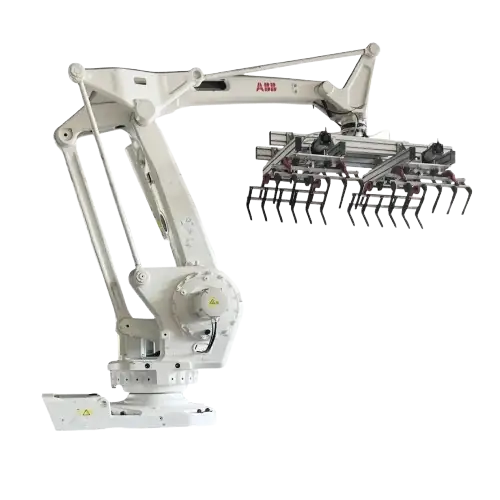
A robotic palletiser is an automated machine that stacks products such as boxes, bags, or cartons onto pallets using a robotic arm.
Products move along a conveyor and the robot picks them up and places them on the pallet according to a programmed stacking pattern.
Robotic palletising is commonly used in:
-
Manufacturing plants
-
Warehouses
-
Food and beverage production
-
Logistics and distribution centres
These systems are a key part of end-of-line automation, preparing goods for shipping quickly and consistently.
How Robotic Palletisers Work
A typical robotic palletising system consists of several components:
1. Conveyor System
Products arrive at the palletising station via conveyors from the packaging or production line.
2. Sensors and Vision Systems
Sensors identify product position, orientation, and spacing.
3. Robotic Arm
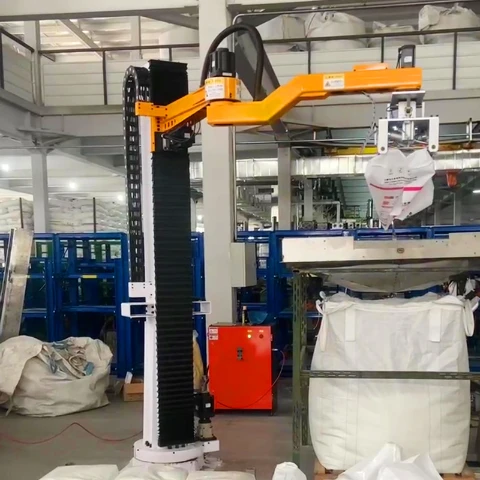
An industrial robot picks up products and places them onto pallets with precise movement.
4. End-of-Arm Tooling (EOAT)
The robot uses specialised grippers or vacuum tools to handle products.
5. Pallet Handling System
Once a pallet is complete, it moves to shipping or storage and a new pallet is introduced.
Process flow
Benefits of Robotic Palletising
1. Increased Productivity
Robotic palletisers can operate continuously without fatigue, enabling faster production throughput and consistent cycle times.
2. Reduced Labour Costs
Automation significantly reduces the need for manual pallet stacking, which can be labour-intensive.
Many manufacturers adopt palletising robots to address labour shortages and rising operational costs
3. Improved Workplace Safety
Manual palletising involves repetitive lifting and heavy loads.
Robotic palletising systems reduce these risks and create safer working environments.
4. Consistent Pallet Quality
Robots ensure every pallet is stacked precisely according to programmed patterns, reducing product damage during transport.
5. Flexible Product Handling
Modern robotic palletisers can handle:
-
cartons
-
boxes
-
bags
-
bottles
-
trays
-
crates
This flexibility makes them ideal for multi-product production lines.
Case Study: Modular Robotic Palletising System
A manufacturer implemented a modular robotic palletising system to improve production efficiency.
The challenge
-
Limited floor space
-
Multiple product types
-
Need for fast changeovers
The solution
A robotic palletiser equipped with interchangeable end-of-arm tooling and a compact layout.
Results
-
40% reduction in labour requirements
-
Compact footprint
-
Faster changeovers between products
This demonstrates how flexible robotic palletising systems can solve common production bottlenecks.
Industries That Use Robotic Palletisers
Robotic palletising is widely used across industries, including:
-
Food and beverage
-
Agriculture
-
Consumer goods
-
Chemical manufacturing
-
Logistics and shipping
These industries benefit from improved throughput and consistent pallet
When Should You Automate Palletising?
Companies usually consider automation when they face:
-
labour shortages
-
rising operational costs
-
production bottlenecks
-
workplace injury risks
-
inconsistent pallet stacking
Robotic palletisers solve these issues while improving overall productivity.
Learn More About Robotic Arm Palletisers
If you are considering automation for your production line, a robotic arm palletiser system could significantly improve efficiency and safety.
Learn more about our Robotic Arm Palletiser System and how it can transform your end-of-line operations.
Featured Thinking