
Rapid open die forging press for heavy-duty metal forming.
Fast Speed Forging Hydraulic Press
The Fast Speed Forging Hydraulic Press is designed for high-efficiency open die forging, rapid free forging and heavy metal forming applications. It supports fast forging cycles, strong hydraulic force, accurate control and optional automation for modern forging workshops.
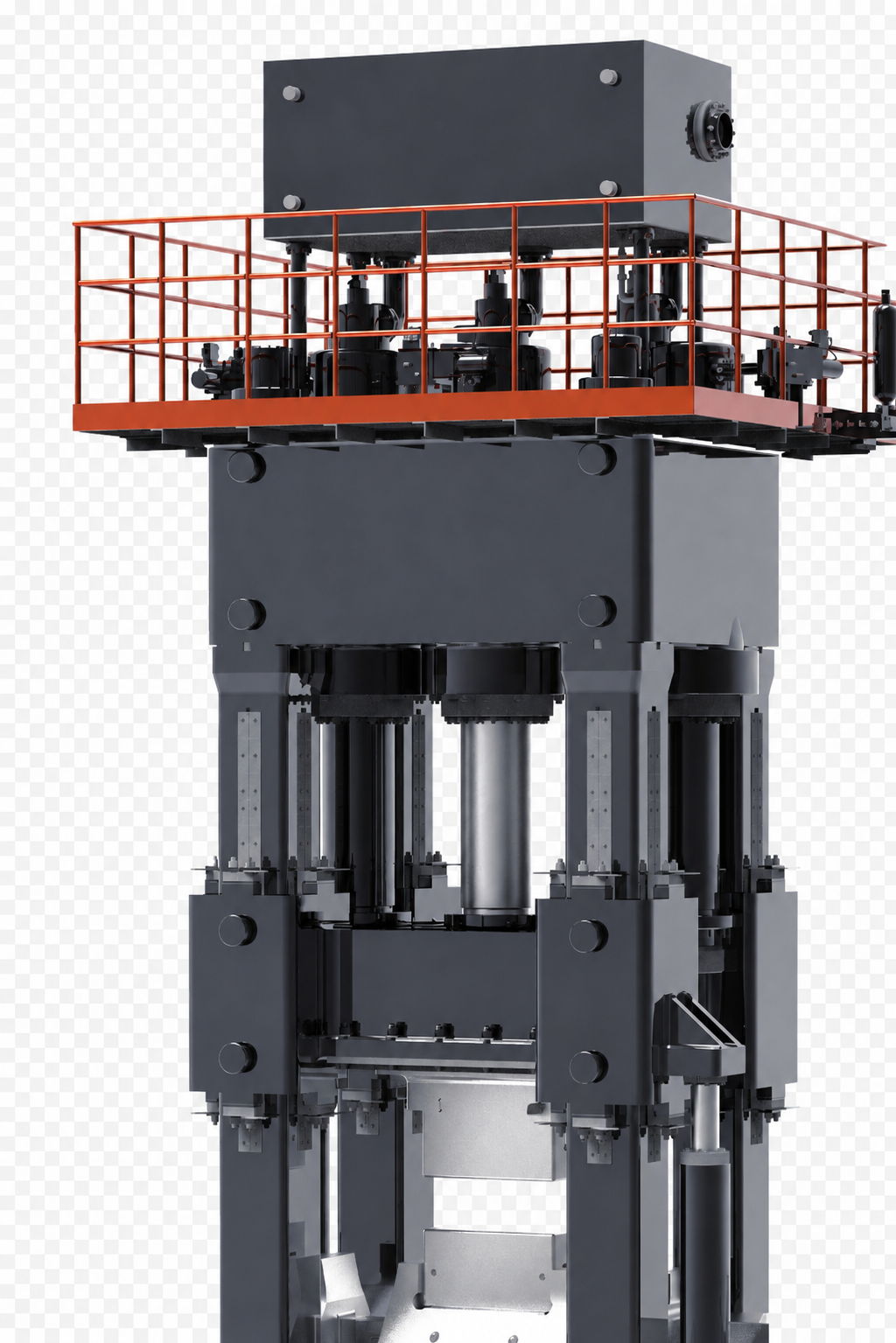

Fast Speed Forging Hydraulic Press for Rapid Open Die Forging
A Fast Speed Forging Hydraulic Press is used for rapid open die forging and free forging of heated metal billets. It is suitable for forging processes that require strong pressing force, quick ram movement, controlled deformation and repeatable production quality.
This machine is commonly used for upsetting, drawing, punching, ring expansion, twisting, bending, shifting and cutting. It is suitable for carbon steel, alloy steel, tool steel, bearing steel, spring steel, stainless steel, die steel, high temperature alloy steel, titanium alloy and other forgeable metals.
The press can be supplied as a standalone forging machine or integrated into a complete forging line with a heating furnace, forging manipulator, charging machine, descaling equipment, travelling worktable and central control system.
Why Choose a Fast Speed Forging Hydraulic Press?
A standard open die hydraulic press is designed for general forging force and flexible heavy forming. A fast speed forging hydraulic press is designed for higher working speed, faster forging frequency and improved production efficiency.
For forging plants handling repeated hot forging operations, the faster working cycle can help reduce processing time, improve billet temperature control and support more consistent deformation. This makes the machine suitable for workshops producing shafts, rings, discs, blocks, bars, flanges, gear blanks and heavy industrial forged parts.
Production Benefits
Higher Forging Efficiency
Better Temperature Utilisation
Improved Forging Accuracy
Reduced Manual Handling
Flexible Forging Capability
Suitable for Heavy Industry
Complete Line Integration
Custom Machine Configuration
Long-Term Production Value
Industries Served
The Fast Speed Forging Hydraulic Press is used across heavy industrial sectors where strength, speed and repeatability are important. It is suitable for forging plants producing large components, specialist alloy parts and heavy-duty blanks for machining or downstream processing.
Common industries include:
- Engineering machinery and construction equipment
- Automotive and commercial vehicle component production
- Railway and transportation parts manufacturing
- Petrochemical equipment and pressure-related components
- Energy, power generation and turbine-related forging
- Shipbuilding, marine engineering and heavy shaft production
- Aerospace-related forging and high-performance alloy processing
- General heavy forging workshops and custom forged part production
In engineering machinery, the press can be used for forged blanks, structural parts and heavy-duty components. In automotive, railway and transport applications, it is suitable for shafts, brackets, gear blanks, couplings and rail-related forgings. For petrochemical, energy and shipbuilding applications, the machine can be configured for flanges, rings, pressure equipment parts, marine forgings and large rotating components.
For specialist materials such as titanium alloy, stainless steel and high temperature alloy steel, controlled hydraulic movement helps support more consistent deformation and repeatable forging quality.
Process Flow
1. Material Preparation
2. Billet Heating
3. Billet Transfer
4. Initial Forging
5. Controlled Forming
6. Workpiece Repositioning
7. Secondary Forging
8. Final Forging
9. Cooling and Inspection
Main Applications
The Fast Speed Forging Hydraulic Press is suitable for rapid open die forging and free forging of heated billets, bars and ingots. It is used where strong pressing force, fast working speed and controlled deformation are required for heavy-duty metal forming.
Typical forging applications include:
- Open die forging of shafts, bars, discs, rings, blocks and heavy forged blanks
- Rapid free forging for repeated deformation and high-efficiency hot forming
- Upsetting, drawing, punching, bending, shifting, twisting and cutting
- Ring blank preparation, including upsetting, punching and ring expansion
- Heavy shaft forging for rollers, spindles, stepped shafts and long forged parts
- Disc, block and flange forging for industrial components and machined blanks
- Special alloy forging for stainless steel, titanium alloy and high temperature alloy steel
With the correct press force, slide stroke, clearance distance and travelling worktable size, the machine can be configured for both medium and large forging projects. It is especially useful for workshops producing forged parts that require repeated pressing, accurate repositioning and stable forming quality.
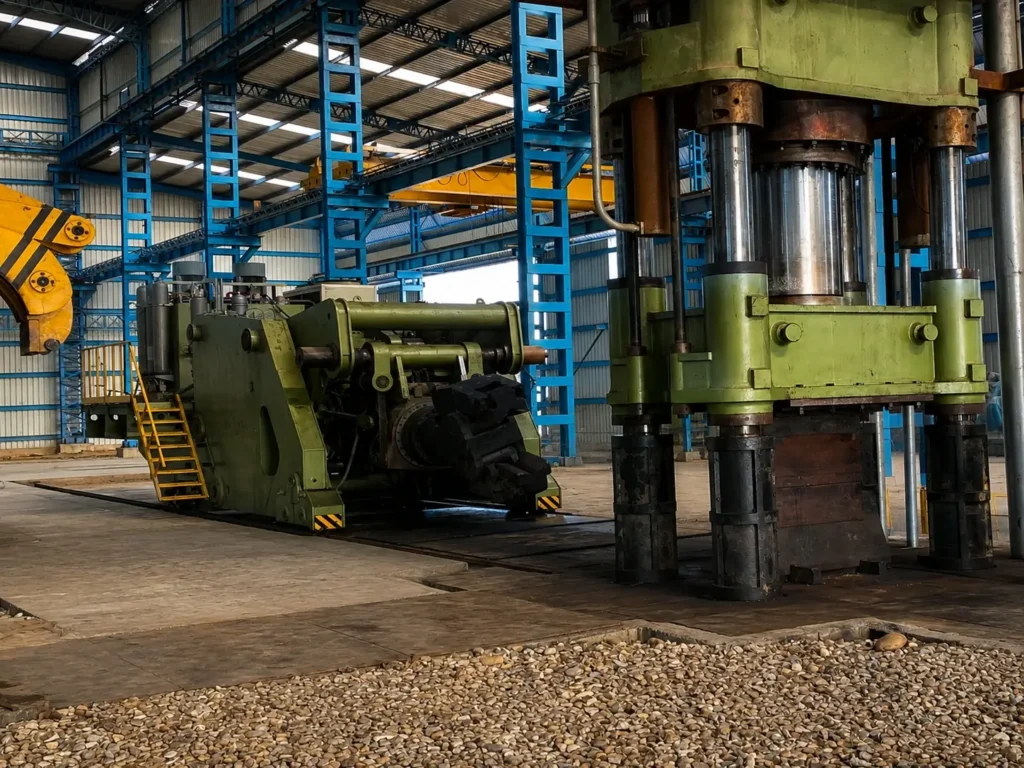
Key Features
High-Speed Forging Cycle
Strong Pressing Force
Multi-Level Working Speed
Advanced Control System
Flexible Operation Modes
Travelling Worktable
Strong Frame Structure
Automation Compatibility
Wide Material Suitability
Technical Specifications
| Specification | Unit | WM-HODP-800 | WM-HODP-1250 | WM-HODP-1600 | WM-HODP-2000 | WM-HODP-2500 | WM-HODP-3150 | WM-HODP-4000 | WM-HODP-5000 | WM-HODP-6300 | WM-HODP-8000 | WM-HODP-10000 | WM-HODP-12500 | WM-HODP-16000 |
|---|---|---|---|---|---|---|---|---|---|---|---|---|---|---|
| Nominal Pressure | MN | 8 | 12.5 | 16 | 20 | 25 | 31.5 | 40 | 50 | 63 | 80 | 100 | 125 | 160 |
| Clearance Distance | mm | 2300 | 2600 | 2900 | 3100 | 3300 | 3800 | 4000 | 4600 | 5300 | 6000 | 6600 | 7200 | 7800 |
| Slide Stroke | mm | 1000 | 1200 | 1400 | 1500 | 1600 | 1800 | 2000 | 2200 | 2500 | 2800 | 3200 | 3600 | 4000 |
| Column Centre Distance | mm | 1900 × 1100 | 2200 × 1300 | 2600 × 1400 | 2800 × 1500 | 3200 × 1600 | 3600 × 1900 | 4400 × 2100 | 4600 × 2200 | 4700 × 2300 | 4800 × 2400 | 5100 × 2600 | 5500 × 2800 | 6000 × 3000 |
| Down Speed | mm/s | 300 | 300 | 300 | 300 | 250 | 250 | 250 | 250 | 250 | 250 | 250 | 250 | 250 |
| Working Speed Level 1 | mm/s [MN] | 68 [8] | 68 [12.5] | 180 [6] | 160 [8] | 172 [10] | 164 [12.5] | 152 [16.5] | 186 [16.5] | 183 [21] | 183 [27] | 183 [33] | 180 [41] | 180 [53] |
| Working Speed Level 2 | mm/s [MN] | / | / | 108 [10] | 105 [12] | 102 [15] | 104 [19] | 104 [23.5] | 93 [33.5] | 92 [42] | 92 [53] | 92 [67] | 90 [84] | 90 [107] |
| Working Speed Level 3 | mm/s [MN] | / | / | 68 [16] | 63 [20] | 64 [25] | 64 [31.5] | 62 [40] | 62 [50] | 61 [63] | 61 [80] | 61 [100] | 60 [125] | 60 [160] |
| Return Speed | mm/s | 300 | 300 | 300 | 300 | 250 | 250 | 250 | 250 | 250 | 250 | 250 | 250 | 250 |
| Rapid Forging Frequency | strokes/min | 60–70 | 60–70 | 60–70 | 60–70 | 60–70 | 55–65 | 50–60 | 45–55 | 40–50 | 35–45 | 30–40 | 25–30 | 20–25 |
| Standard Forging Frequency | strokes/min | / | / | 25–35 | 25–35 | 25–35 | 20–30 | 20–30 | 20–30 | 15–25 | 10–20 | 7–15 | 5–10 | 3–6 |
| Travelling Worktable Size | mm | 2700 × 1300 | 3200 × 1500 | 3500 × 1600 | 3700 × 1700 | 5000 × 2000 | 5000 × 2300 | 6000 × 2500 | 6000 × 2800 | 7000 × 3000 | 7000 × 3200 | 8000 × 3500 | 9000 × 4000 | 12000 × 4500 |
| Travelling Worktable Left and Right Stroke | mm | ±1000 | ±1400 | ±1600 | ±1800 | ±2000 | ±2500 | ±2500 | ±3000 | ±3000 | ±3000 | ±3250 | ±3500 | ±4000 |
| Dimensional Accuracy | mm | ±1 | ±1 | ±1 | ±1 | ±1 | ±1 | ±1 | ±1.5 | ±1.5 | ±1.5 | ±2 | ±2 | ±3 |
| Total Power / Adjustable Travelling Worktable Speed | kW | 700 | 1050 | 1400 | 1600 | 2050 | 2500 | 3200 | 3800 | 4800 | 6200 | 7500 | 9500 | 12000 |
| Height Above Floor | mm | ≤6800 | ≤8000 | ≤8500 | ≤9000 | ≤9500 | ≤10000 | ≤11000 | ≤13000 | ≤14500 | ≤16000 | ≤17500 | ≤19000 | ≤22000 |
| Application Scope |
Forging Process: Open die forging, rapid free forging, hot forging, upsetting, drawing out, stretching, flattening, piercing, punching, ring expansion, twisting, bending, shifting, cutting and preforming Suitable Materials: Carbon steel, alloy steel, stainless steel, tool steel, bearing steel, spring steel, die steel, high temperature alloy steel, titanium alloy, heavy steel billets and other forgeable metals Typical Products: Shafts, rings, discs, cylinders, bars, blocks, flanges, axles, rollers, spindles, gear blanks, stepped forgings, petrochemical components, energy components and heavy industrial forged parts |
|||||||||||||
| Note | The above fast speed forging hydraulic press technical specifications are for reference only and may vary depending on machine configuration, forging material, billet size, production process, automation requirements, supplier design, foundation conditions and project requirements. | |||||||||||||
Complete Open Die Forging Press Line Options
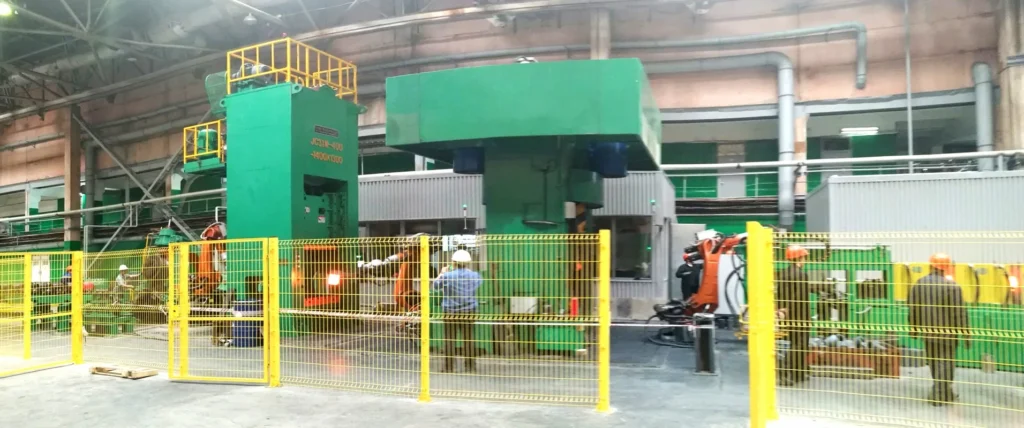
The Fast Speed Forging Hydraulic Press can be supplied as a standalone machine or integrated into a complete forging line. The right auxiliary equipment depends on billet size, workpiece weight, production output, automation level and workshop layout.
Common optional equipment includes:
- Forging manipulator for gripping, rotating and positioning hot workpieces
- Charging machine for transferring heated billets from furnace to press
- Heating furnace for bringing billets to the required forging temperature
- Descaling equipment for removing oxide scale before forging
- Travelling worktable for loading, unloading and die changing
- Die changing system for reducing tooling changeover time
- Central control system for coordinating the press and auxiliary machines
- Cooling, transfer and handling equipment for downstream production flow
A forging manipulator is recommended for heavy or long workpieces that need repeated rotation and accurate positioning. A charging machine can reduce manual handling by moving heated billets from the furnace to the press area. Descaling equipment helps remove surface oxide scale before forging, which can improve forged surface quality and reduce scale-related issues.
For higher-output production, the press can be connected with a furnace, manipulator, charging system and central control system. This creates a smoother forging line where heating, transfer, forging, handling and monitoring can be coordinated more efficiently.
First ever packaging machine questionnaire
Which machine do you need?
Take our quick questionnaire to discover which machine fits your needs. For an exact match and pricing, a detailed quote will be required.