
Heavy Duty Hydraulic Forging Press for Large Shafts, Rings, Discs and Industrial Metal Components
Hydraulic Open Die Forging Press
Wiz Machinery supplies hydraulic open die forging presses for heavy-duty open die forging, free forging and large metal component production, with suitable configurations available for shafts, rings, discs, blocks, bars and complete forging line applications.
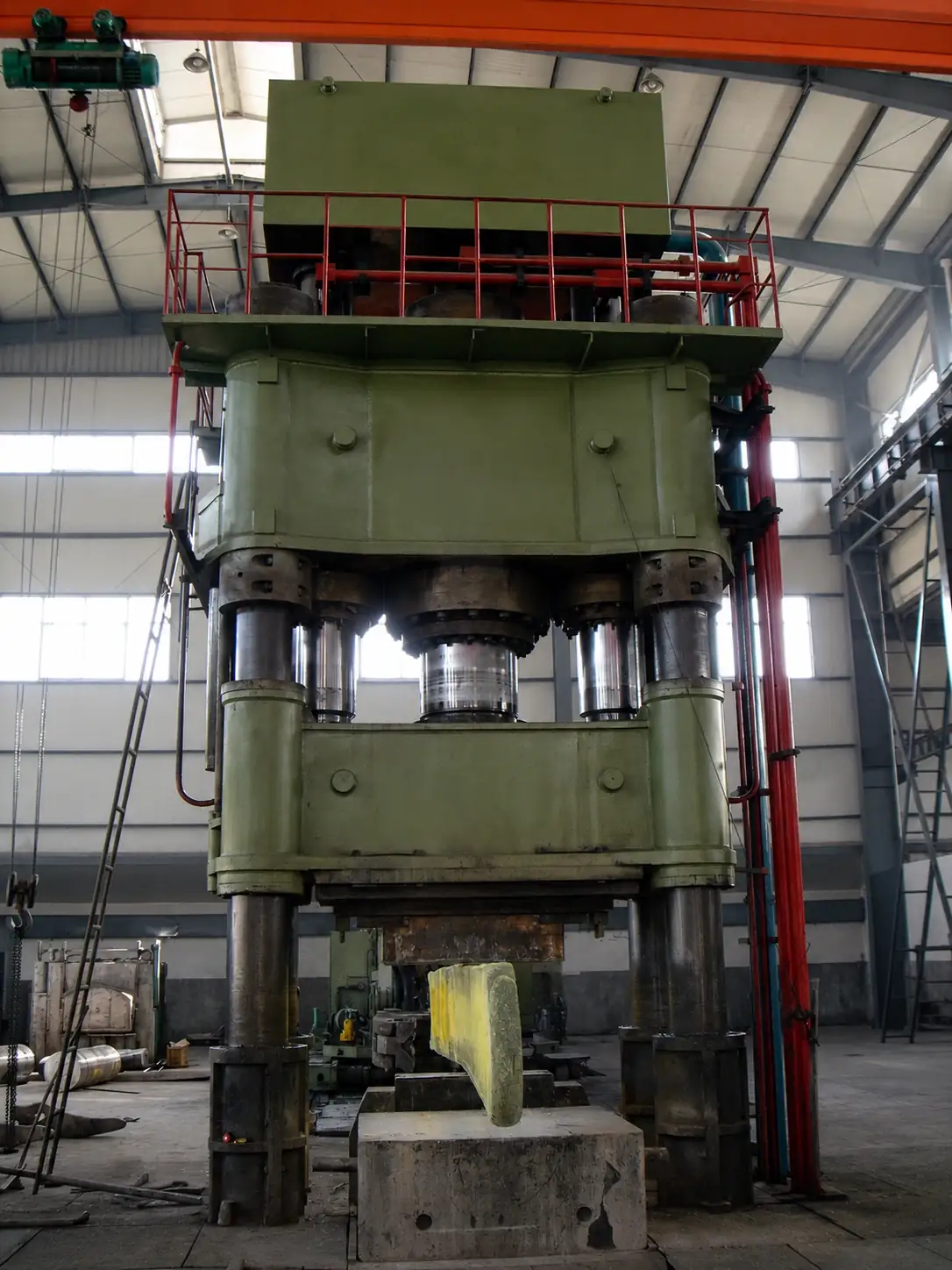

Hydraulic Open Die Forging Press
Wiz Machinery supplies hydraulic open die forging presses for heavy-duty open die forging, free forging and large metal forming applications. These machines are suitable for forging shafts, rings, discs, cylinders, blocks, bars and other large forged components used in demanding industrial sectors.
A hydraulic open die forging press uses controlled hydraulic pressure to shape heated metal between open dies. It is suitable for manufacturers that need strong forming force, stable operation, flexible workpiece handling and reliable performance for heavy forging production.
As a machinery sourcing and trading partner, Wiz Machinery can help you select a suitable open die forging press based on your workpiece size, material, forging process, production capacity and factory layout. We can also support complete forging line configurations with manipulators, furnaces, travelling worktables and control systems.
Heavy Duty Open Die Forging Press for Large Metal Components
A hydraulic open die forging press is designed for shaping large heated billets through repeated pressing, rotating and repositioning. Unlike closed die forging, open die forging does not fully enclose the workpiece inside a shaped die cavity. This makes it more flexible for producing large, customised and lower-volume heavy forgings.
The machine can be used for many free forging processes, including upsetting, drawing out, stretching, flattening, punching, piercing, bending, offset forging and preforming before machining or ring rolling.
This type of hydraulic forging press is commonly used by forging plants, steel processing factories, heavy machinery manufacturers, power generation suppliers, shipbuilding companies, mining equipment manufacturers, rail component producers and industrial metal forming workshops.
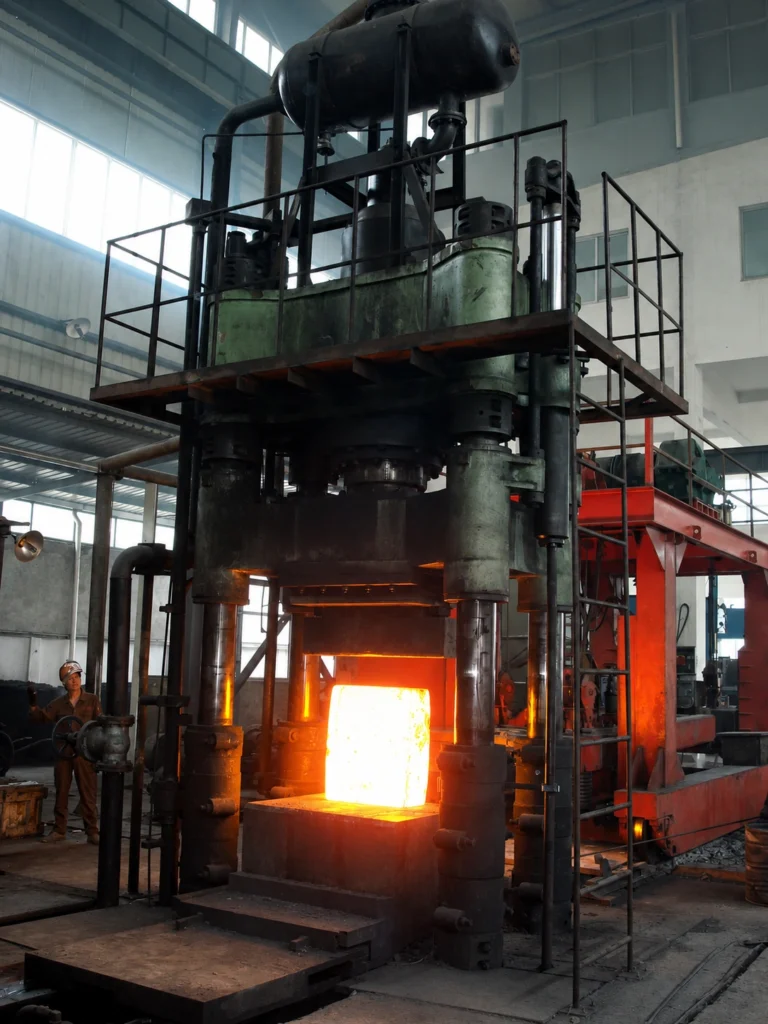
Features
Heavy Duty Press Structure
Controlled Hydraulic Pressing Force
Multiple Forging Speed Options
Suitable for Free Forging and Open Die Forging
Travelling Worktable Option
Forging Manipulator Integration
What Is a Hydraulic Open Die Forging Press?
A hydraulic open die forging press is a large forging machine that applies hydraulic pressure to deform hot metal between open dies. The workpiece is normally handled by crane, manipulator or travelling worktable, allowing the operator to rotate and move the billet between forging passes.
The machine is suitable for open die forging and free forging because it provides controlled pressing force instead of impact force. This allows better control over deformation, metal flow and dimensional consistency, especially when working with large or heavy billets.
For many heavy forging applications, the open die forging press is used together with a forging manipulator. The manipulator holds, rotates and positions the hot workpiece while the press applies force. This improves safety, repeatability and production efficiency.
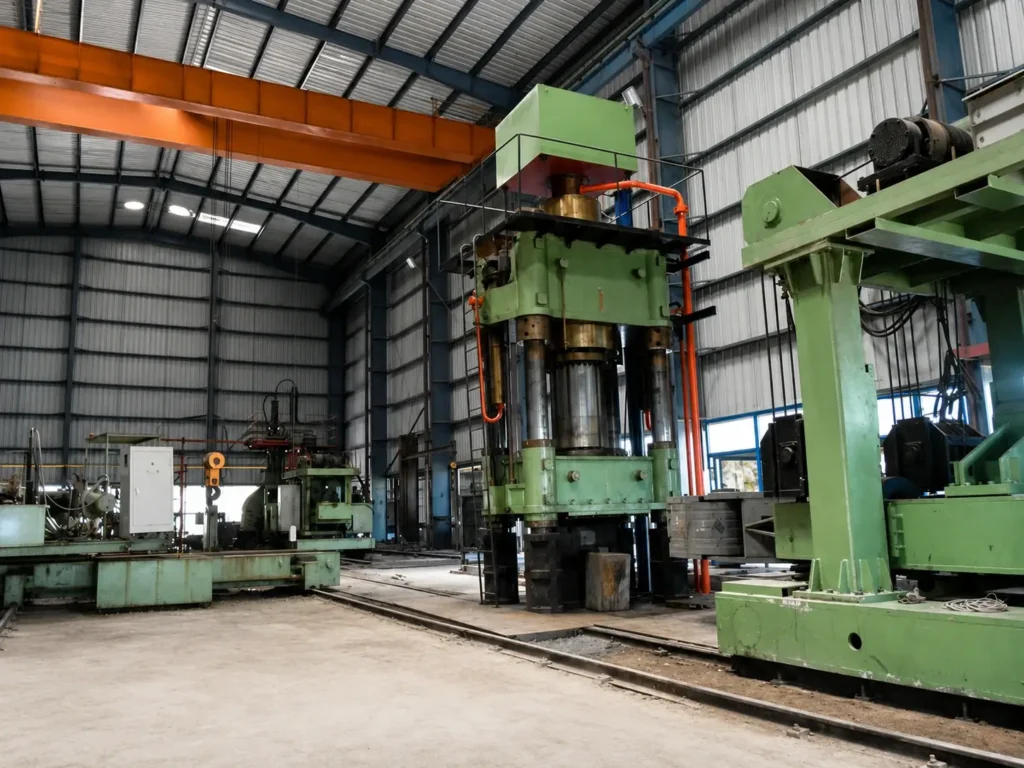
How to Choose the Right Hydraulic Open Die Forging Press
Workpiece Size and Weight
Material Type
Forging Process
Production Output
Workshop Layout
Automation Level
Key Applications of Hydraulic Open Die Forging Presses
Wiz Machinery can help source hydraulic open die forging presses for a wide range of industrial forging applications.
- Large shaft forging
- Ring blank forging
- Disc and flange forging
- Cylinder and tube blank forging
- Bar and block forging
- Step shaft and axle forging
- Heavy steel component forging
- Alloy steel forging
- Stainless steel forging
- Tool steel forging
- Preforming before machining
- Preforming before ring rolling
- Heavy industrial part production
These machines are suitable for producing forged parts used in power generation, oil and gas, shipbuilding, mining, construction equipment, rail, automotive, aerospace support industries and general heavy engineering.
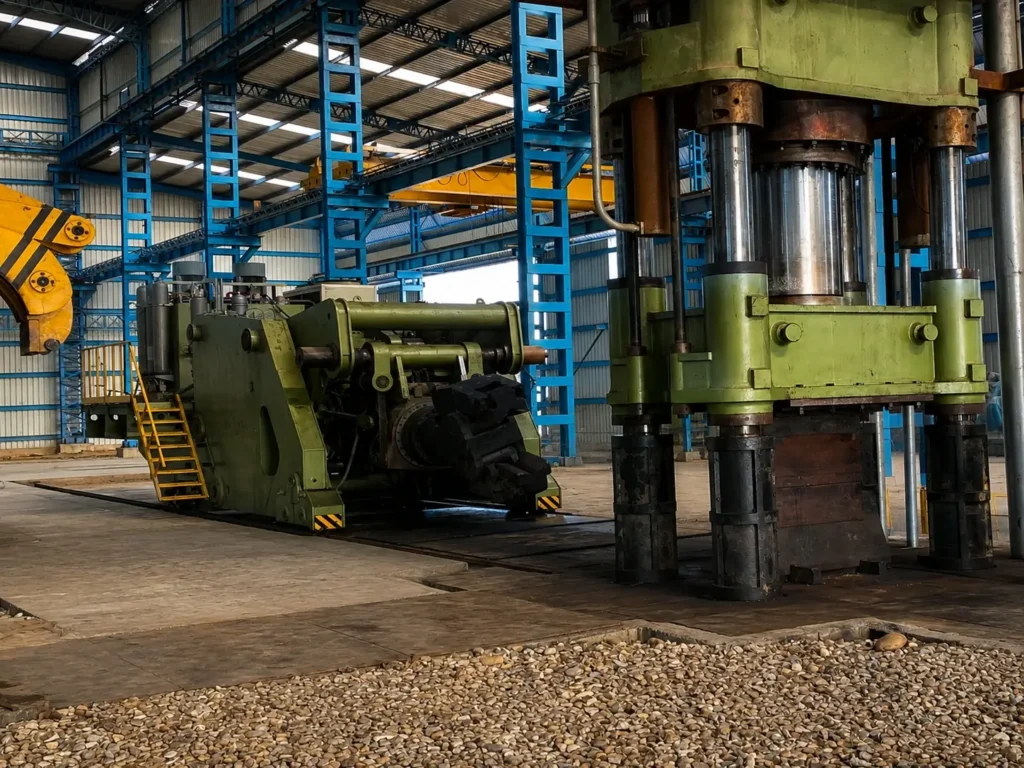
Advantages of a Hydraulic Open Die Forging Press
Controlled Forging Force
Suitable for Large and Heavy Workpieces
Flexible Production for Different Forged Parts
Improved Safety with Forging Manipulator Integration
Better Process Control
Lower Tooling Cost Compared with Closed Die Forging
Complete Forging Line Integration
Suitable for Heavy Industrial Applications
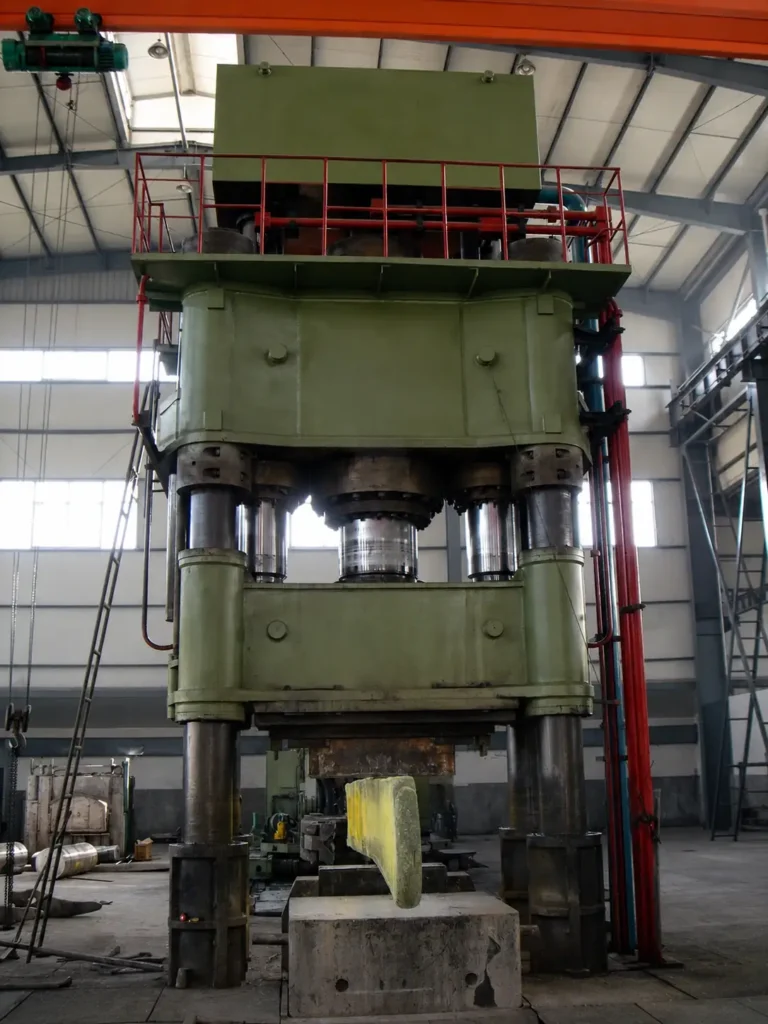
Hydraulic Open Die Forging Press Technical Specifications
Small to Medium Capacity Hydraulic Open Die Forging Presses
| Specification | Unit | WM-HODP-800 | WM-HODP-1250 | WM-HODP-1600 | WM-HODP-2000 | WM-HODP-2500 |
|---|---|---|---|---|---|---|
| Nominal Pressure | MN | 8 | 12.5 | 16 | 20 | 25 |
| Clearance Distance | mm | 2300 | 2600 | 2900 | 3100 | 3300 |
| Slide Stroke | mm | 1000 | 1200 | 1400 | 1500 | 1600 |
| Column Centre Distance | mm | 1900 × 1100 | 2200 × 1300 | 2600 × 1400 | 2800 × 1500 | 3200 × 1600 |
| Down Speed | mm/s | 300 | 300 | 300 | 300 | 250 |
| Working Speed Level 1 | mm/s [MN] | 68 [8] | 68 [12.5] | 180 [6] | 160 [8] | 172 [10] |
| Working Speed Level 2 | mm/s [MN] | / | / | 108 [10] | 105 [12] | 102 [15] |
| Working Speed Level 3 | mm/s [MN] | / | / | 68 [16] | 63 [20] | 64 [25] |
| Return Speed | mm/s | 300 | 300 | 300 | 300 | 250 |
| Rapid Forging Frequency | strokes/min | 60–70 | 60–70 | 60–70 | 60–70 | 60–70 |
| Standard Forging Frequency | strokes/min | / | / | 25–35 | 25–35 | 25–35 |
| Travelling Worktable Size | mm | 2700 × 1300 | 3200 × 1500 | 3500 × 1600 | 3700 × 1700 | 5000 × 2000 |
| Left and Right Stroke | mm | ±1000 | ±1400 | ±1600 | ±1800 | ±2000 |
| Dimensional Accuracy | mm | ±1 | ±1 | ±1 | ±1 | ±1 |
| Total Power | kW | 700 | 1050 | 1400 | 1600 | 2050 |
| Height Above Floor | mm | ≤6800 | ≤8000 | ≤8500 | ≤9000 | ≤9500 |
| Application Scope |
Forging Process: Open die forging, free forging, hot forging, upsetting, drawing out, stretching, flattening, piercing, bending and preforming Suitable Materials: Carbon steel, alloy steel, stainless steel, tool steel, heavy steel billets and other forgeable metals Typical Products: Shafts, rings, discs, cylinders, bars, blocks, flanges, axles and heavy industrial forged components |
|||||
| Note | The above technical specifications are for reference only and may vary depending on machine configuration, forging material, billet size, production process, supplier design and project requirements. | |||||
Large Capacity
| Specification | Unit | WM-HODP-3150 | WM-HODP-4000 | WM-HODP-5000 | WM-HODP-6300 | WM-HODP-8000 | WM-HODP-10000 | WM-HODP-12500 | WM-HODP-16000 |
|---|---|---|---|---|---|---|---|---|---|
| Nominal Pressure | MN | 31.5 | 40 | 50 | 63 | 80 | 100 | 125 | 160 |
| Clearance Distance | mm | 3800 | 4000 | 4600 | 5300 | 6000 | 6600 | 7200 | 7800 |
| Slide Stroke | mm | 1800 | 2000 | 2200 | 2500 | 2800 | 3200 | 3600 | 4000 |
| Column Centre Distance | mm | 3600 × 1900 | 4400 × 2100 | 4600 × 2200 | 4700 × 2300 | 4800 × 2400 | 5100 × 2600 | 5500 × 2800 | 6000 × 3000 |
| Down Speed | mm/s | 250 | 250 | 250 | 250 | 250 | 250 | 250 | 250 |
| Working Speed Level 1 | mm/s [MN] | 164 [12.5] | 152 [16.5] | 186 [16.5] | 183 [21] | 183 [27] | 183 [33] | 180 [41] | 180 [53] |
| Working Speed Level 2 | mm/s [MN] | 104 [19] | 104 [23.5] | 93 [33.5] | 92 [42] | 92 [53] | 92 [67] | 90 [84] | 90 [107] |
| Working Speed Level 3 | mm/s [MN] | 64 [31.5] | 62 [40] | 62 [50] | 61 [63] | 61 [80] | 61 [100] | 60 [125] | 60 [160] |
| Return Speed | mm/s | 250 | 250 | 250 | 250 | 250 | 250 | 250 | 250 |
| Rapid Forging Frequency | strokes/min | 55–65 | 50–60 | 45–55 | 40–50 | 35–45 | 30–40 | 25–30 | 20–25 |
| Standard Forging Frequency | strokes/min | 20–30 | 20–30 | 20–30 | 15–25 | 10–20 | 7–15 | 5–10 | 3–6 |
| Travelling Worktable Size | mm | 5000 × 2300 | 6000 × 2500 | 6000 × 2800 | 7000 × 3000 | 7000 × 3200 | 8000 × 3500 | 9000 × 4000 | 12000 × 4500 |
| Left and Right Stroke | mm | ±2500 | ±2500 | ±3000 | ±3000 | ±3000 | ±3250 | ±3500 | ±4000 |
| Dimensional Accuracy | mm | ±1 | ±1 | ±1.5 | ±1.5 | ±1.5 | ±2 | ±2 | ±3 |
| Total Power | kW | 2500 | 3200 | 3800 | 4800 | 6200 | 7500 | 9500 | 12000 |
| Height Above Floor | mm | ≤10000 | ≤11000 | ≤13000 | ≤14500 | ≤16000 | ≤17500 | ≤19000 | ≤22000 |
| Application Scope |
Forging Process: Open die forging, free forging, hot forging, upsetting, drawing out, stretching, flattening, piercing, bending, heavy preforming and large billet forging Suitable Materials: Carbon steel, alloy steel, stainless steel, tool steel, heavy steel billets and other forgeable metals Typical Products: Large shafts, rings, discs, cylinders, blocks, bars, axles, flanges, heavy machinery parts, power generation components and industrial forged products |
||||||||
| Note | The above technical specifications are for reference only and may vary depending on machine configuration, forging material, billet size, die design, automation level, factory layout and project requirements. | ||||||||
Complete Open Die Forging Press Line Options
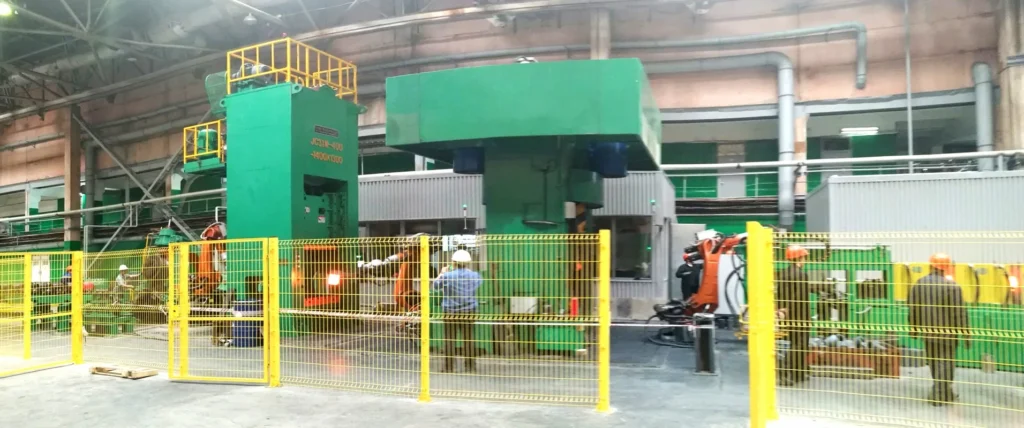
A complete hydraulic open die forging press line can be configured according to your production requirements. Depending on the workpiece and output target, the line may include:
A typical automated line may include:
- Hydraulic open die forging press
- Forging manipulator
- Heating furnace
- Reheating furnace
- Charging and loading equipment
- Travelling worktable
- Hydraulic power unit
- Electrical control system
- Operator control console
- Tooling and die support
- Cooling and lubrication system
- Workpiece transfer equipment
- Safety protection system
For large workpieces, the press is often used together with a manipulator and travelling worktable. This improves workpiece movement, positioning, rotation and operator safety during repeated forging passes.
First ever packaging machine questionnaire
Which machine do you need?
Take our quick questionnaire to discover which bagging machine fits your needs. For an exact match and pricing, a detailed quote will be required.