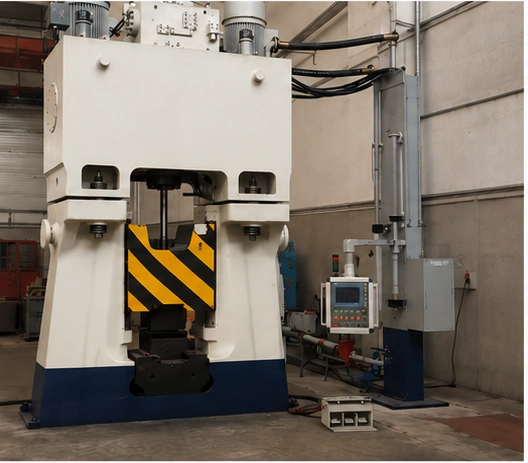
Precision CNC hydraulic hammer for closed-die hot forging.

CNC Hydraulic Closed Die Forging Hammer

Supports accurate, repeatable closed-die forging for automotive, hardware and industrial metal parts.

Certification

Hydraulic Forging Hammer for Precision Closed-Die Forging

A CNC hydraulic closed die forging hammer is used for accurate and repeatable hot forging of metal parts inside shaped forging dies. It is suitable for factories producing automotive parts, hand tools, hardware components, agricultural machinery parts, engineering machinery components, stainless steel products and other precision forged parts.


With CNC control, hydraulic drive and programmable strike energy, this machine helps improve forging consistency, reduce manual variation and support modern closed-die forging production.

Wiz Machinery helps international buyers source suitable CNC hydraulic closed die forging hammer solutions based on the forged part drawing, material, billet size, die design, production capacity and automation requirements.

What Is a CNC Hydraulic Closed Die Forging Hammer?

A CNC hydraulic closed die forging hammer is an industrial forging machine used to shape heated metal billets inside closed forging dies. The upper and lower dies form the required part shape, while the hammer delivers controlled impact energy to force the hot metal into the die cavity.

This process is also known as closed die forging or impression die forging. It is widely used when manufacturers need forged parts with high strength, repeatable dimensions and stable production quality.

Compared with traditional forging hammers, a CNC hydraulic forging hammer provides better control over strike energy, hammer movement and forging sequence. This makes it suitable for factories that need more consistent forging results and easier integration with automated forging lines.
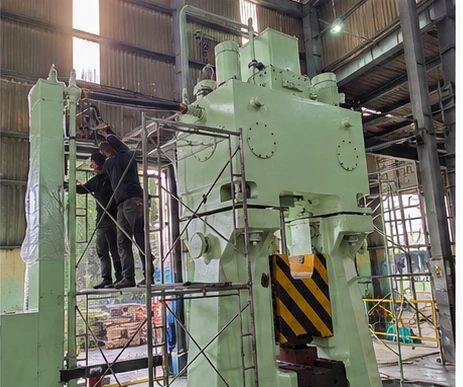
green_hydraulic_forging_press_scaffolding
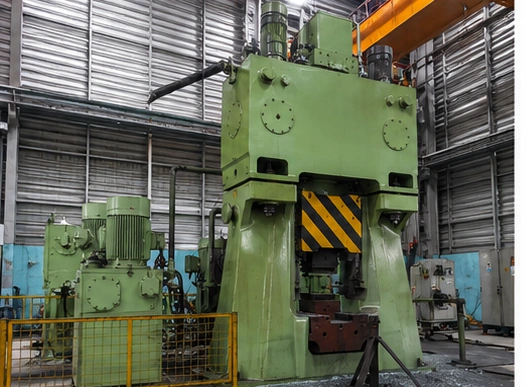
green_hydraulic_forging_press_factory_view

Features

CNC Control System

The CNC control system allows operators to set, adjust and manage forging parameters. It can support programmable striking sequences and process adjustment for different forged parts.

Hydraulic Power and Motion Control

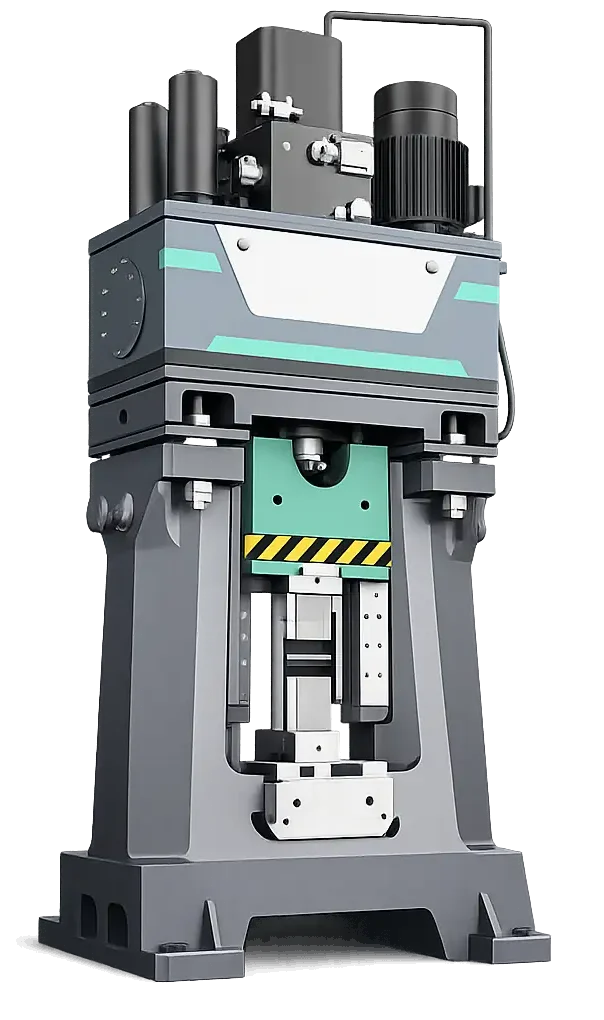
The hydraulic system controls the hammer’s striking and return movement. It is designed for stable impact performance, efficient energy transfer and reliable continuous operation.

Strong Machine Frame

The machine frame is designed for heavy-duty closed-die forging applications. A rigid structure supports impact resistance, die alignment and long-term production stability.

Precision Guide System

The guide system helps control hammer movement and maintain accurate striking alignment. This is important for consistent die filling, repeatable forging quality and reduced uneven die wear.

Die Adjustment Support

The hammer head can be controlled for die adjustment, mould replacement and production setup. This helps reduce changeover time and supports safer maintenance operation.

Automation Compatibility

The machine can be integrated with feeding systems, forging robots, automatic lubrication systems, trimming presses, cooling conveyors and other auxiliary equipment to create a complete forging production cell.

Common Applications

Automotive Forgings

Suitable for producing strong, repeatable automotive components such as connecting rods, gear blanks, brackets, control arms and suspension parts. CNC-controlled strike energy helps improve part consistency across medium and high-volume production.

Hand Tool Forgings

Used for forging tool blanks such as wrenches, spanners, pliers, hammers, chisels and other hand tools. Closed-die forging helps create durable tool shapes with good strength and repeatable dimensions.

Hardware & Rigging Parts

Ideal for hooks, clamps, fittings, fastener blanks, lifting links and rigging components. The machine supports accurate die filling for compact, high-strength parts used in industrial and construction applications.

Agricultural & Construction Machinery Parts

Suitable for heavy-duty forged parts used in agricultural equipment, construction machinery and engineering machinery. Common parts include brackets, links, couplings, blade holders and wear-resistant components.

Stainless Steel & Kitchenware Forgings

Can be used for stainless steel tableware, kitchenware blanks, fittings and other formed stainless steel parts. Controlled forging helps improve shape consistency, material flow and surface quality before finishing.

Precision Industrial Components

Suitable for custom forged blanks, mechanical parts and high-strength components used across general manufacturing, railway, mining and heavy industry. This is useful where repeatable quality and reliable part strength are important.

Process Steps

1. Billet Heating

The metal billet is heated to the correct forging temperature using an induction heating furnace, gas furnace or other heating system. Proper billet heating helps improve material flow, die filling and final forged part quality.

2. Billet Loading

The heated billet is placed into the lower forging die manually, by manipulator or by robot. Accurate billet placement is important for stable closed-die forging and repeatable part dimensions.

3. Die Positioning

The upper and lower dies are aligned to form the required part shape. The closed die cavity controls the metal flow during forging and helps produce accurate, high-strength forged components.

4. CNC-Controlled Hammer Striking

The CNC hydraulic forging hammer delivers controlled impact energy to shape the hot billet inside the die cavity. The strike energy can be adjusted according to the forging stage, part shape and material requirement.

5. Final Forming

The hammer applies final forming blows to complete the closed-die forging process. This helps the material fully fill the die cavity and achieve the required forged part shape.

6. Sizing or Calibration

For parts that need tighter dimensional control, additional controlled blows can be used for sizing or calibration. This supports more consistent forged part height, shape and batch quality.

7. Flash Trimming

After forging, excess flash around the part can be removed using a trimming press or suitable trimming equipment. This prepares the forged part for cooling, inspection and further processing.

8. Cooling and Inspection

The forged part is cooled and checked for shape, dimensions and surface condition. This final step helps confirm that the part meets the required production and quality standards.
white_hydraulic_forging_press_factory_front_view

CNC Hydraulic Forging Hammer vs Traditional Forging Hammer

Traditional forging hammers can be suitable for general forging work, but they often depend heavily on operator experience. Strike energy may be less consistent, and process repeatability can be more difficult to control.

A CNC hydraulic forging hammer offers better process control through programmable strike energy and hydraulic movement. This helps improve forging consistency, reduce unnecessary impact and support automated forging production.

For manufacturers focused on precision closed-die forging, stable batch quality and production efficiency, a CNC hydraulic closed die forging hammer can be a practical upgrade from older steam, air or manually controlled hammer systems.
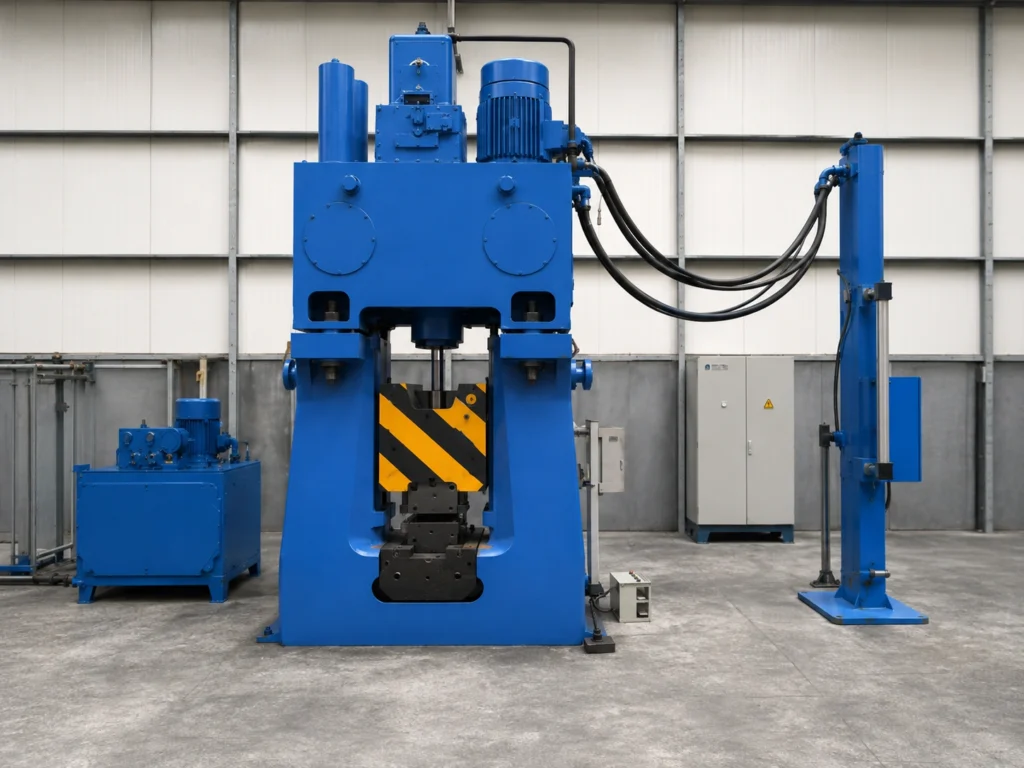
How to Choose the Right CNC Hydraulic Closed Die Forging Hammer

Forged Part Size and Shape

Large, complex or deep-cavity parts may require higher impact energy and a larger die area. Parts with thin ribs or difficult-to-fill areas may need more controlled energy and a carefully designed forging process.

Material Type

Different metals behave differently during hot forging. Carbon steel, alloy steel, stainless steel, aluminium alloy, brass and copper may require different forging temperatures, die designs and forming conditions.

Billet Weight

The billet size and weight directly affect the required hammer capacity, die filling behaviour and production efficiency.

Die Size

The machine must have enough die space, guiding accuracy and structural strength to support the required die set.

Production Capacity

A small-batch workshop may need a different machine and handling setup compared with a high-volume automated forging line.

Automation Requirement

If the machine will be used with robot loading, automatic feeding, die lubrication, trimming and cooling equipment, the full line layout should be planned before purchasing the machine.

Technical specifications

Specification Unit WM-16 WM-25 WM-31.5 WM-40 WM-50 WM-63 WM-80 WM-100 WM-125 WM-160 WM-200 WM-250 WM-320 WM-400 WM-450 WM-500 WM-625
Blow Energy kJ 16 25 31.5 40 50 63 80 100 125 160 200 250 320 400 450 500 625
Ram Weight kg 1080 1700 2100 2700 3400 4350 5650 6900 8500 10000 12000 12800 14000 20000 22000 24000 28500
Distance Between Guides mm 520 608 664 700 766 800 850 850 1000 1040 1000 1000 1000 1200 1200 1200 1300
Max. Blow Frequency min-1 90 90 85 85 85 80 75 75 70 55 55 50 45 40 40 40 33
Blow Stroke mm 480–640 495–685 500–700 500–710 510–740 520–760 560–810 600–850 700–950 800–1000 900–1100 950–1150 950–1150 1100–1300 1150–1350 1150–1350 1150–1350
Main Motor kW 37 55 55 90 2 × 55 2 × 55 2 × 90 2 × 90 2 × 110 3 × 90 4 × 90 4 × 90 4 × 110 6 × 110 6 × 110 6 × 110 6 × 110
Application Scope Forging Process: Closed die forging, impression die forging, hot forging, preforming, final forging, sizing and calibration
Suitable Materials: Carbon steel, alloy steel, stainless steel, aluminium alloy, brass, copper and other forgeable metals
Typical Products: Automotive parts, hand tools, hardware components, agricultural machinery parts, engineering machinery parts, gear blanks, connecting rods, brackets, fittings and precision forged components
Note The above CNC hydraulic closed die forging hammer technical parameters are for reference only. Final specifications may vary depending on machine configuration, forged part size, material, die design, automation requirements and project conditions.

For accurate model selection, please send your workpiece size, material, forging temperature, required process and expected production output. Wiz Machinery can help match the hammer capacity to your application.

Complete Open Die Forging Press Line Options
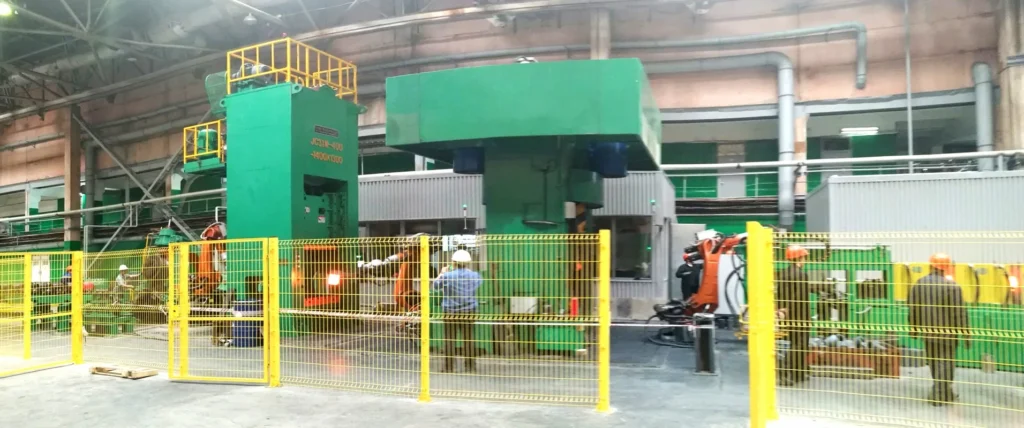
A complete CNC hydraulic closed die forging hammer line can be configured according to your production requirements. Depending on the forged part, material, billet size and output target, the line may include:

A typical automated line may include:

  1. CNC hydraulic closed die forging hammer
  2. Billet cutting machine
  3. Induction heating furnace
  4. Automatic billet feeding system
  5. Forging robot or manipulator
  6. Automatic die lubrication system
  7. Trimming press
  8. Cooling conveyor
  9. Hydraulic power unit
  10. Electrical control system
  11. Operator control console
  12. Tooling and die support
  13. Workpiece transfer equipment
  14. Safety protection system

For higher-output production, the hammer is often used together with induction heating, robot loading, automatic die lubrication, trimming and cooling equipment. This improves billet handling, forging repeatability, production efficiency and operator safety during continuous closed-die forging production.

First ever packaging machine questionnaire

Which machine do you need?

Take our quick questionnaire to discover which bagging machine fits your needs. For an exact match and pricing, a detailed quote will be required.

FAQ

What is the difference between “close die” and “closed die” forging hammer?

“Closed die” is the more standard English term. “Close die” is also commonly used by some buyers and suppliers. Both usually refer to a forging hammer used with shaped upper and lower dies to produce impression die forgings.

Is this machine the same as a power hammer?

Not exactly. “Power hammer” is a broad term that can refer to many types of forging hammers, including small blacksmith hammers, pneumatic hammers and open-die forging hammers. A CNC hydraulic closed die forging hammer is a specific industrial machine for precision closed-die forging production.

Can the machine be used in an automated forging line?

Yes. The machine can be integrated with induction heating, robot loading, automatic die lubrication, trimming presses, cooling conveyors and other production equipment.

How do I choose the right model?

The right model depends on the forged part size, material, billet weight, die dimensions and production output. Send us your part drawing and production details, and Wiz Machinery can help recommend a suitable configuration.

The right model depends on the forged part size, material, billet weight, die dimensions and production output. Send us your part drawing and production details, and Wiz Machinery can help recommend a suitable configuration.

Yes. Wiz Machinery can help source and configure supporting forging line equipment such as heating systems, feeding systems, robots, trimming presses, conveyors and auxiliary machinery.

Is this machine suitable for precision forging?

Yes. Smaller capacity pneumatic power hammers are suitable for blacksmith workshops, blade forging, tool making, artistic metalwork and repair jobs.

Can the machine be customised?

Yes. The machine and production line can be configured according to the forged part, material, factory layout, automation level and production target.