
Pneumatic forging hammers for open die forging and hot metal forming
Pneumatic Forging Hammer / Power Hammer
Pneumatic forging hammers for controlled hot metal forming, open die forging and workshop production, with model selection support from Wiz Machinery.
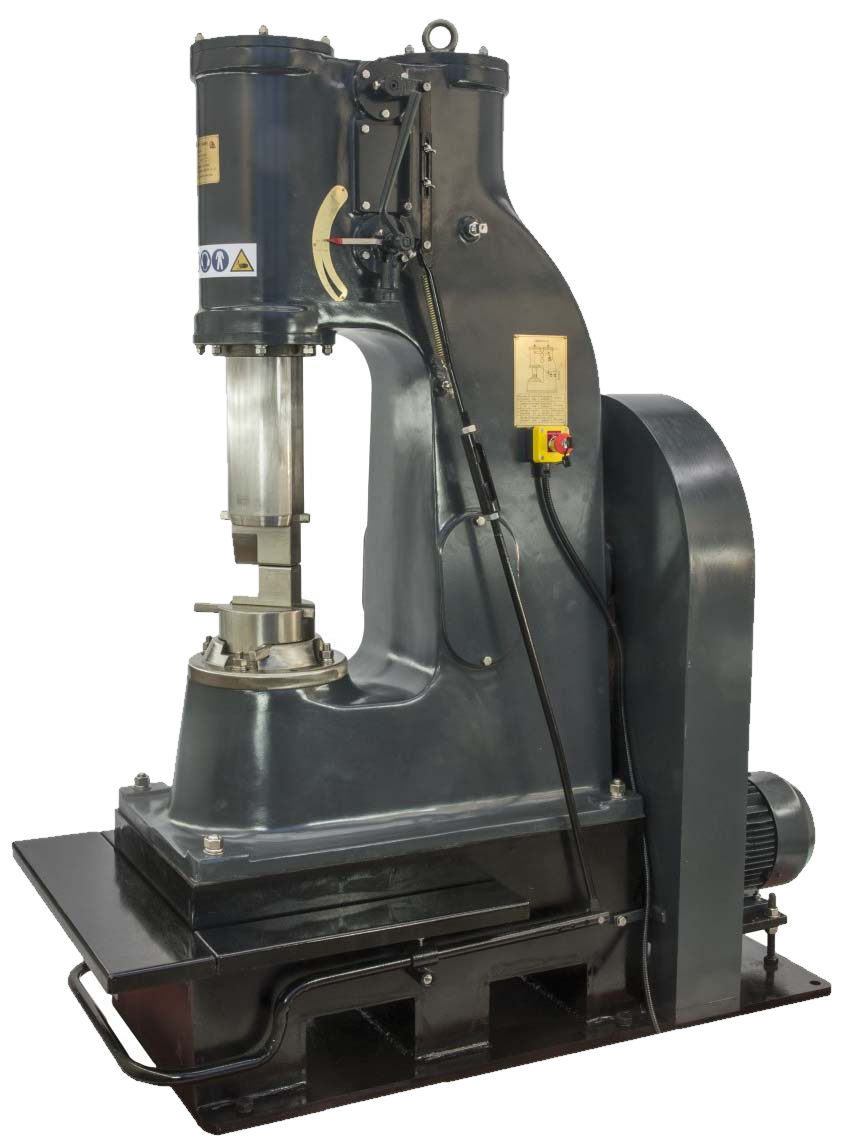
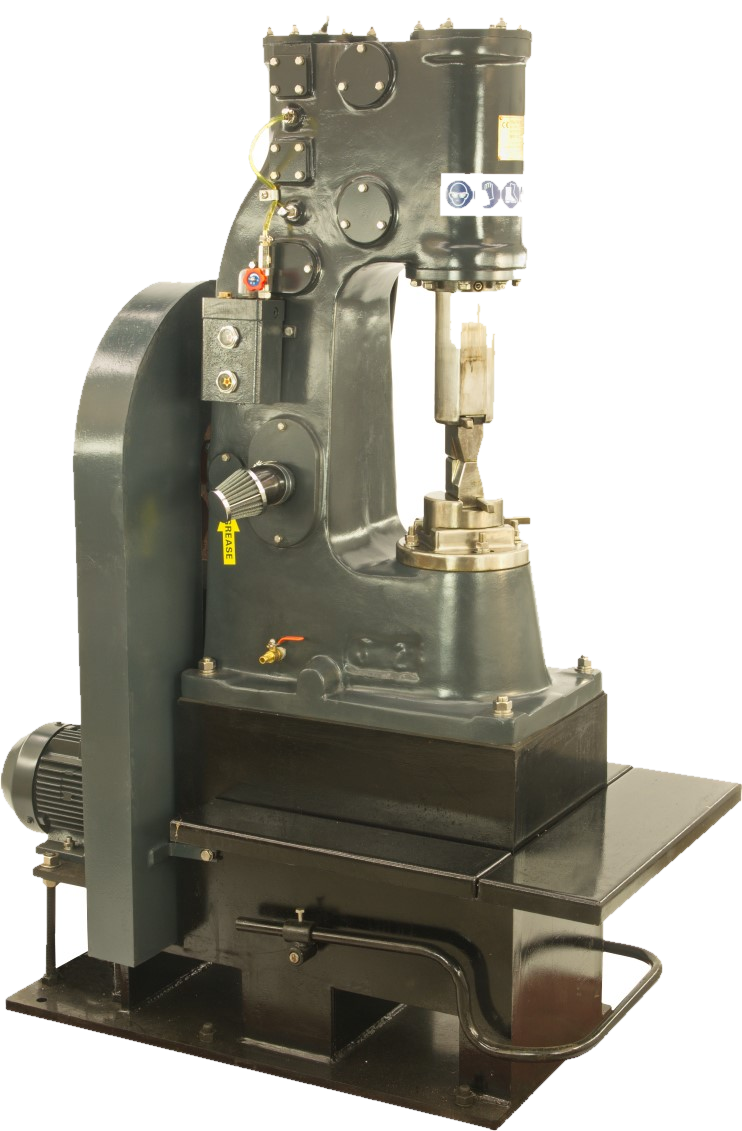

Pneumatic Forging Hammer for Open Die Forging
A pneumatic forging hammer is a self-contained power hammer designed for shaping heated metal through controlled repeated impact. It is widely used for open die forging, blacksmith forging, tool making, repair work and industrial hot metal forming.
Unlike manual hammering, a pneumatic power hammer allows the operator to form hot metal faster, more consistently and with less physical effort. The machine can be used for both heavier forging work and lighter finishing operations, making it a practical choice for workshops and factories that need flexible forging capacity.
Wiz Machinery supplies pneumatic forging hammer machines in different capacity ranges to suit small workshops, blacksmith production, repair facilities and industrial forging applications. Our team can help you choose the right hammer according to your material, billet size, forging process, factory power supply and production target.
What Is a Pneumatic Forging Hammer?
A pneumatic forging hammer is a powered forging machine that uses a motor-driven pneumatic system to move the hammer ram up and down. The heated workpiece is placed on the lower die or anvil, and the hammer delivers repeated blows to shape the metal.
This type of machine is also known as an air forging hammer, pneumatic power hammer, power forging hammer or forging hammer machine. It is commonly used in free forging and open die forging, where metal is shaped between flat or simple dies.
The machine is suitable for many hot forging operations, including drawing-out, upsetting, bending, punching, twisting, chiselling, forge welding, flattening and hot cutting.
Features
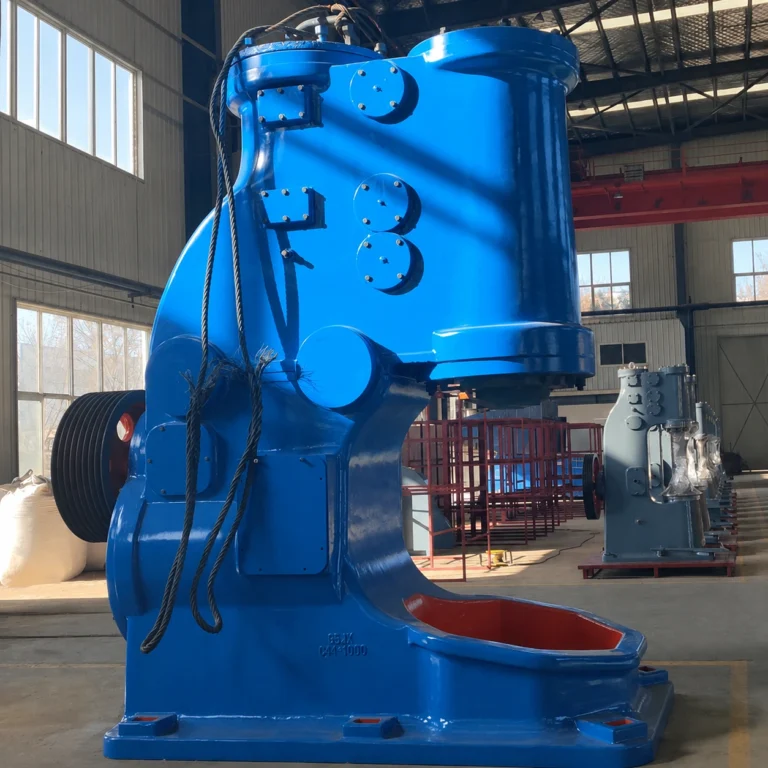
Heavy-Duty Cast Frame
Integrated Pneumatic Working System
External Belt Drive
Controlled Hammer Operation
Automatic Lubrication Support
Durable Ram and Anvil Area
Suitable Forging Processes
| Forging Process | Description | Typical Use |
|---|---|---|
| Drawing-out | Reduces the cross-section of heated metal and increases its length. | Bars, shafts, tools and elongated forged parts |
| Upsetting | Compresses the heated workpiece to increase its cross-section or form a thicker section. | Tool ends, bolt-style heads, short thick sections and local forming |
| Punching | Creates holes or openings in heated metal using suitable punching tools. | Tool eyes, brackets, links, rings and hardware parts |
| Chiselling | Cuts, separates or marks heated metal using chisel-type tooling. | Hot cutting, splitting, shaping and preparation work |
| Forge Welding | Joins heated metal surfaces together using pressure and repeated hammer impact. | Tool making, repair work, blacksmith forging and joined components |
| Bending | Forms heated metal into angles, curves or required profiles. | Hooks, brackets, handles, rings and shaped components |
| Twisting | Twists heated bars or sections to create functional or decorative forms. | Decorative ironwork, handles, tools and custom forged parts |
| Open Die Forging | Shapes heated metal between flat or simple dies without fully enclosing the workpiece. | Free forging, repair work, shafts, bars and small-batch forged parts |
| Flattening | Creates flatter surfaces or prepares the workpiece for further forming. | Plates, blades, tools, brackets and general shaping |
| Hot Cutting | Cuts heated bars, billets or forged sections using cutting dies or hot cutting tools. | Billet preparation, trimming and separating forged parts |
| Tool Forging | Forms heated metal into working tools or tool blanks through repeated impact. | Chisels, punches, knives, hand tools and agricultural tools |
| Note | Core processes include drawing-out, upsetting, punching, chiselling, forge welding, bending and twisting. Other applications depend on hammer capacity, die design, workpiece size, forging temperature, material and operator requirements. | |
Common Applications
Blacksmith Forging
Open Die Forging
Tool and Hardware Manufacturing
Repair and Maintenance Workshops
Industrial Hot Metal Forming
Pneumatic Forging Hammer Working Principle
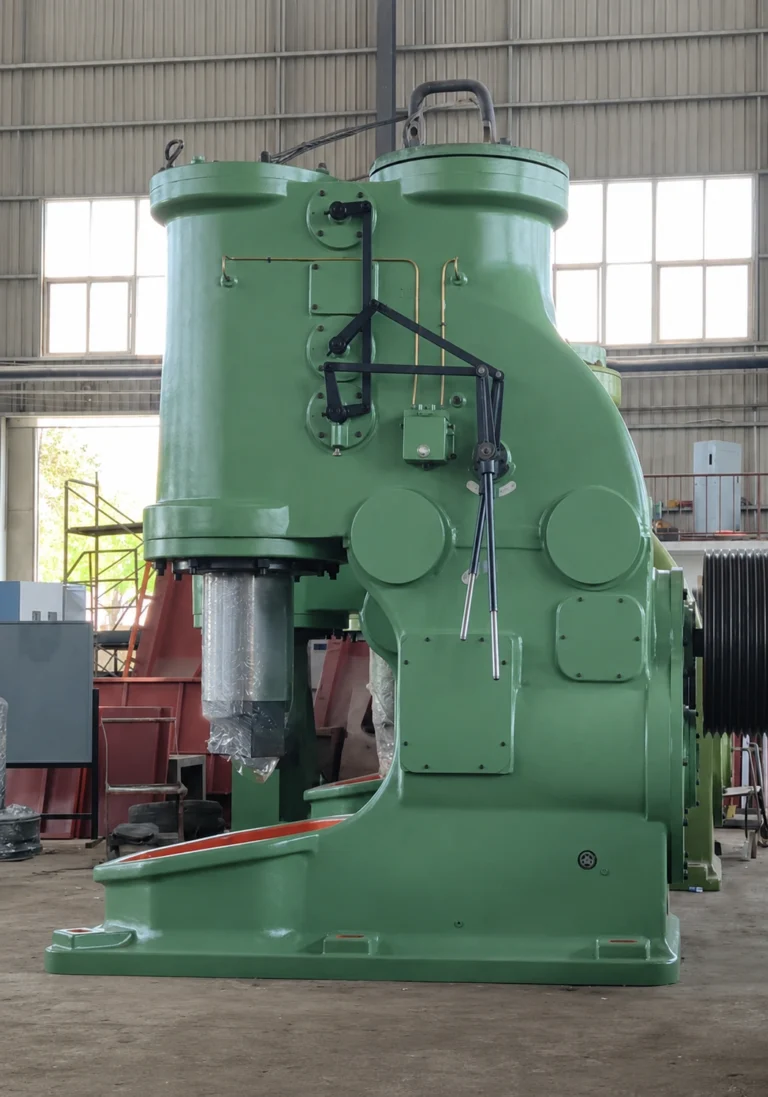
The pneumatic power hammer uses a motor-driven flywheel and crank mechanism to operate the internal pneumatic system. As the machine runs, compressed air is directed to move the hammer ram up and down.
The operator controls the forging hammer through the machine control system, usually using a hand lever or foot pedal. This allows the hammer to perform idle running, top positioning, pressing, single blows, light blows and continuous forging blows.
The forging force is created by a combination of ram weight, air pressure and ram speed. This gives the machine strong impact performance while still allowing the operator to control the hammer action during different forging stages.
Key Benefits of a Pneumatic Power Hammer
Self-Contained Hammer Design
Strong Forging Force
Flexible Hammer Control
Suitable for Heavy and Light Work
Compact Workshop Footprint
Durable Industrial Structure
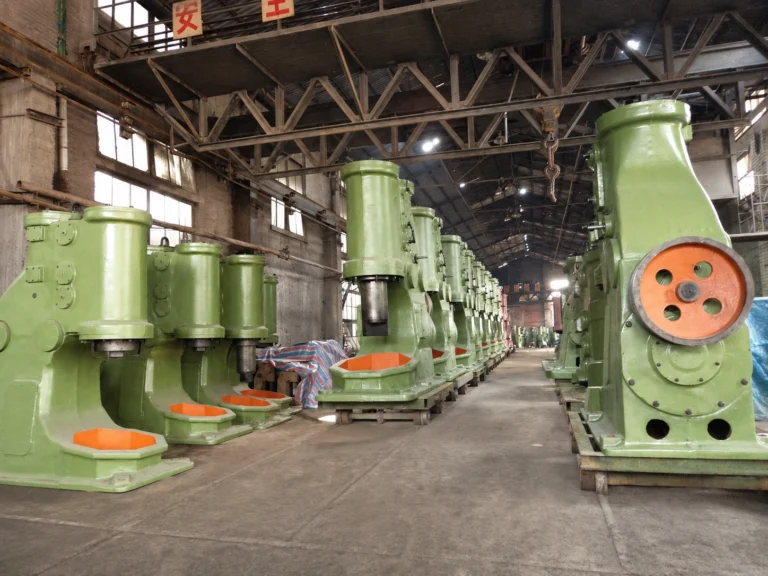
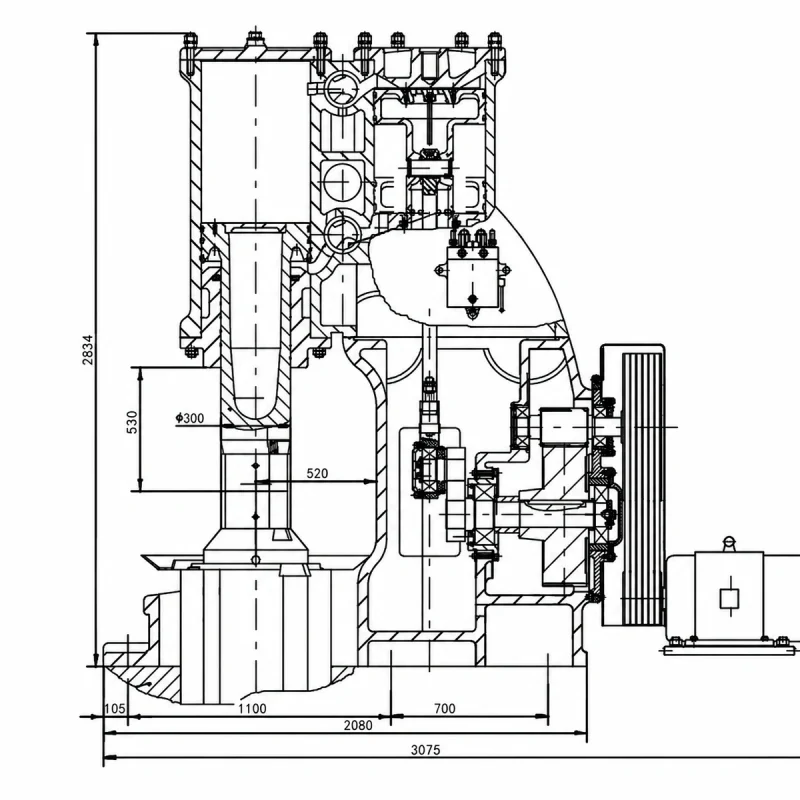
Machine Structure
A pneumatic forging hammer machine is made up of several key parts that work together to deliver controlled impact force.
| Main Component | Function | Importance |
|---|---|---|
| Machine Frame | Supports the hammer structure and absorbs forging impact during operation. | Provides stability, strength and long-term machine durability. |
| Motor | Provides power to drive the hammer mechanism. | Ensures consistent power output for repeated forging work. |
| Flywheel and Belt Drive | Transfers motor power to the crank system. | Helps maintain smooth running and stable hammer movement. |
| Crankshaft and Connecting Rod | Converts rotary movement into reciprocating movement. | Creates the up-and-down motion needed for hammer operation. |
| Compression Cylinder | Helps generate the pneumatic movement required for hammer operation. | Supports the internal air system that drives the hammer action. |
| Working Cylinder | Controls the ram movement during forging. | Helps deliver controlled impact force onto the workpiece. |
| Ram / Hammer Head | Delivers impact force onto the heated workpiece. | Performs the main forging action for shaping hot metal. |
| Upper and Lower Dies | Contact and shape the heated metal during forging. | Determine the contact surface, forming effect and forging process. |
| Anvil Block | Provides a stable base for forging impact. | Absorbs impact force and supports stable forging performance. |
| Lubrication System | Supports smooth operation and helps protect moving parts. | Reduces wear and supports longer machine service life. |
| Control Lever or Foot Pedal | Allows the operator to control hammer action. | Enables single blows, light blows and continuous forging control. |
| Note | Machine structure and component design may vary depending on hammer capacity, configuration, tooling requirements and project specifications. | |
Process flow
1. Material preparation
2. Heating
3. Positioning
4. Initial forging
5. Forming
6. Finishing
7. Cooling
8. Inspection
8. Further processing
Technical specifications
| Specification | Unit | 150 kg | 250 kg | 400 kg | 560 kg | 750 kg | 1000 kg | 2000 kg |
|---|---|---|---|---|---|---|---|---|
| Structure | — | Two-piece | Two-piece | Two-piece | Two-piece | Two-piece | Two-piece | Two-piece |
| Falling Part Weight | kg | 150 | 250 | 400 | 560 | 750 | 1000 | 2000 |
| Striking Energy | kJ | 2.5 | 5.6 | 9.5 | 13.7 | 19 | 27 | 54 |
| Blows Per Minute | min-1 | 180 | 140 | 120 | 115 | 105 | 95 | 80 |
| Working Height | mm | 370 | 450 | 530 | 600 | 670 | 800 | 1000 |
| Throat Depth | mm | 350 | 420 | 520 | 550 | 750 | 800 | 950 |
| Square Workpiece Capacity | mm | 130 × 130 | 145 × 145 | 220 × 220 | 270 × 270 | 270 × 270 | 290 × 290 | 350 × 350 |
| Round Workpiece Capacity | mm | Ø145 | Ø175 | Ø240 | Ø280 | Ø300 | Ø320 | Ø400 |
| Motor Power | kW | 18.5 | 22 | 30 | 45 | 55 | 75 | 132 |
| Machine Weight Including Base | kg | 3260 | 5000 | 8000 | 9800 | 17000 | 20000 | 48000 |
| Anvil Block Weight | kg | 1500 | 2500 | 4200 | 6300 | 9000 | 12000 | 24000 |
| Application Scope |
Forging Process: Open die forging, free forging, drawing-out, upsetting, bending, punching, chiselling, twisting, forge welding and hot forming Suitable Materials: Carbon steel, alloy steel, stainless steel, aluminium alloy, copper, brass and other forgeable metals Typical Products: Shafts, bars, rings, tools, hardware parts, agricultural tools, repair parts and small to medium forged components |
|||||||
| Note | The above technical specifications are for reference only. Final specifications may vary depending on hammer capacity, machine configuration, forging material, tooling design and project requirements. | |||||||
For accurate model selection, please send your workpiece size, material, forging temperature, required process and expected production output. Wiz Machinery can help match the hammer capacity to your application.
How to Choose the Right Pneumatic Forging Hammer
Choosing the right pneumatic forging hammer is important for forging quality, machine life and production efficiency. A hammer that is too small may struggle with larger stock, while an oversized hammer may be unnecessary for smaller workshop parts.
1. Confirm the Material
2. Check the Workpiece Size
3. Define the Forging Process
4. Review Production Volume
5. Consider Factory Space
6. Plan Tooling Requirements
Optional Dies and Tooling
A pneumatic forging hammer can be used with different dies and forging tools depending on the workpiece and process. For most open die forging applications, simple flat dies are commonly used, while drawing, fullering, cutting, punching or customised tools may be selected for specific operations.
| Tooling Option | Typical Use | Suitable Forging Application |
|---|---|---|
| Flat Dies | General open die forging, flattening, drawing and basic shaping. | Bars, billets, shafts, tools, brackets and general forged parts. |
| Drawing Dies | Reducing the cross-section and lengthening heated bars or billets. | Drawing-out, bar forging, shaft forming and elongated forged components. |
| Fullering Tools | Creating grooves, transitions and local reductions in heated metal. | Tool making, shaft transitions, decorative work and shaped reductions. |
| Cutting Tools / Hot Cutting Dies | Cutting heated bars, billets or forged sections during the forging process. | Billet preparation, hot cutting, trimming and separating forged parts. |
| Punching Tools | Creating holes or openings in heated metal using suitable tooling. | Tool eyes, brackets, links, rings, handles and hardware components. |
| Bending Tools | Forming heated metal into angles, hooks, curves and shaped profiles. | Hooks, brackets, handles, rings, decorative ironwork and custom forged parts. |
| Custom Top and Bottom Dies | Supporting repeated production of specific forged shapes where suitable. | Small-batch forged parts, repair components, tool blanks and repeatable open die forging work. |
| Note | Tooling suitability depends on hammer capacity, material, forging temperature, die design, workpiece size and operator requirements. For complex precision shapes, a forging press, die forging hammer or closed die forging machine may be more suitable. | |
Note: Tooling suitability depends on hammer capacity, material, forging temperature, die design, workpiece size and operator requirements. For complex precision shapes, a forging press, die forging hammer or closed die forging machine may be more suitable.
First ever packaging machine questionnaire
Which machine do you need?
Take our quick questionnaire to discover which bagging machine fits your needs. For an exact match and pricing, a detailed quote will be required.