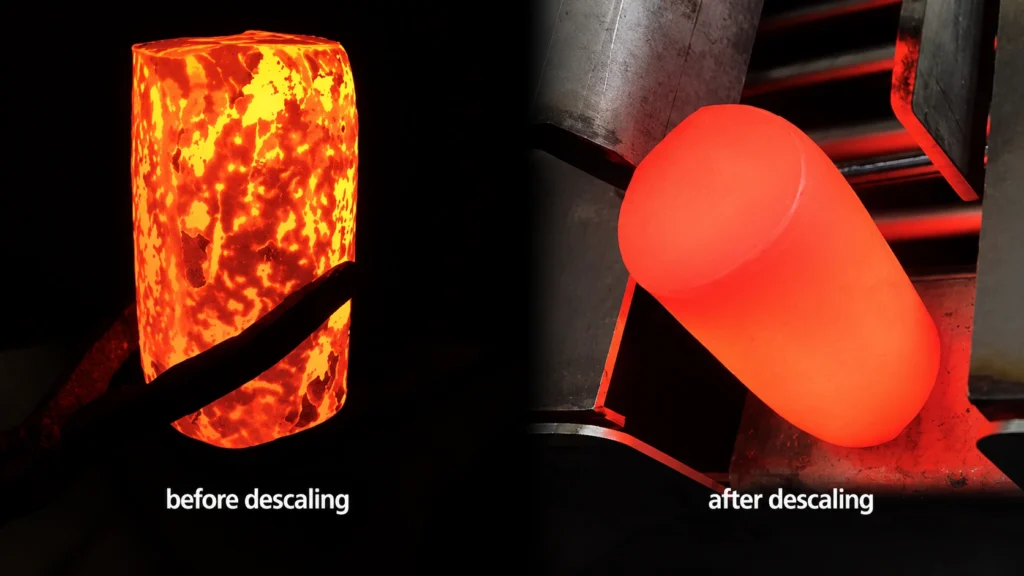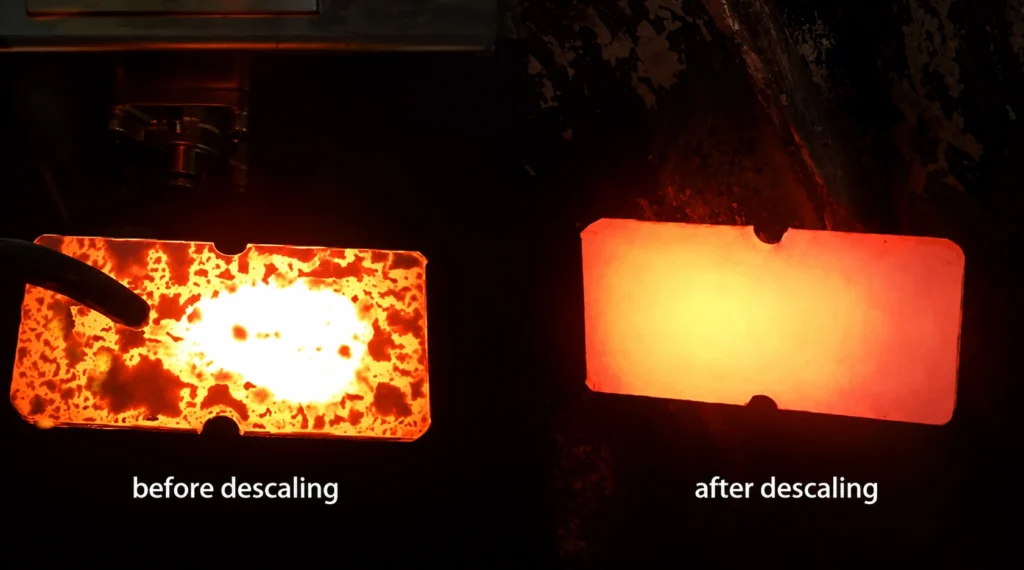
Fast oxide scale removal for hot billets before forging.

Scale Removal Device

WM Series scale removal devices help remove oxide scale from heated billets and forgings before forming, improving surface quality, reducing defects and supporting cleaner forging production.
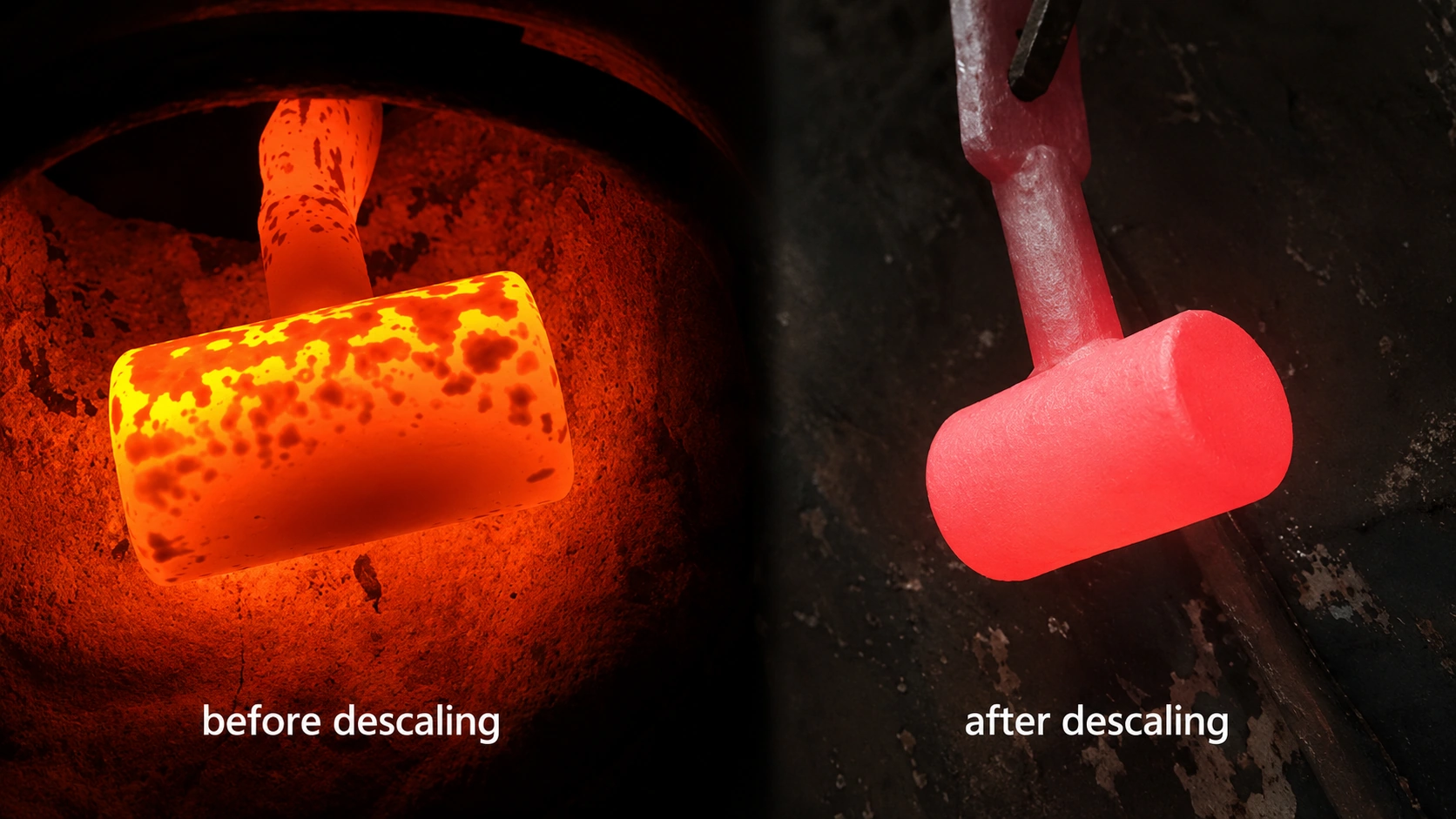
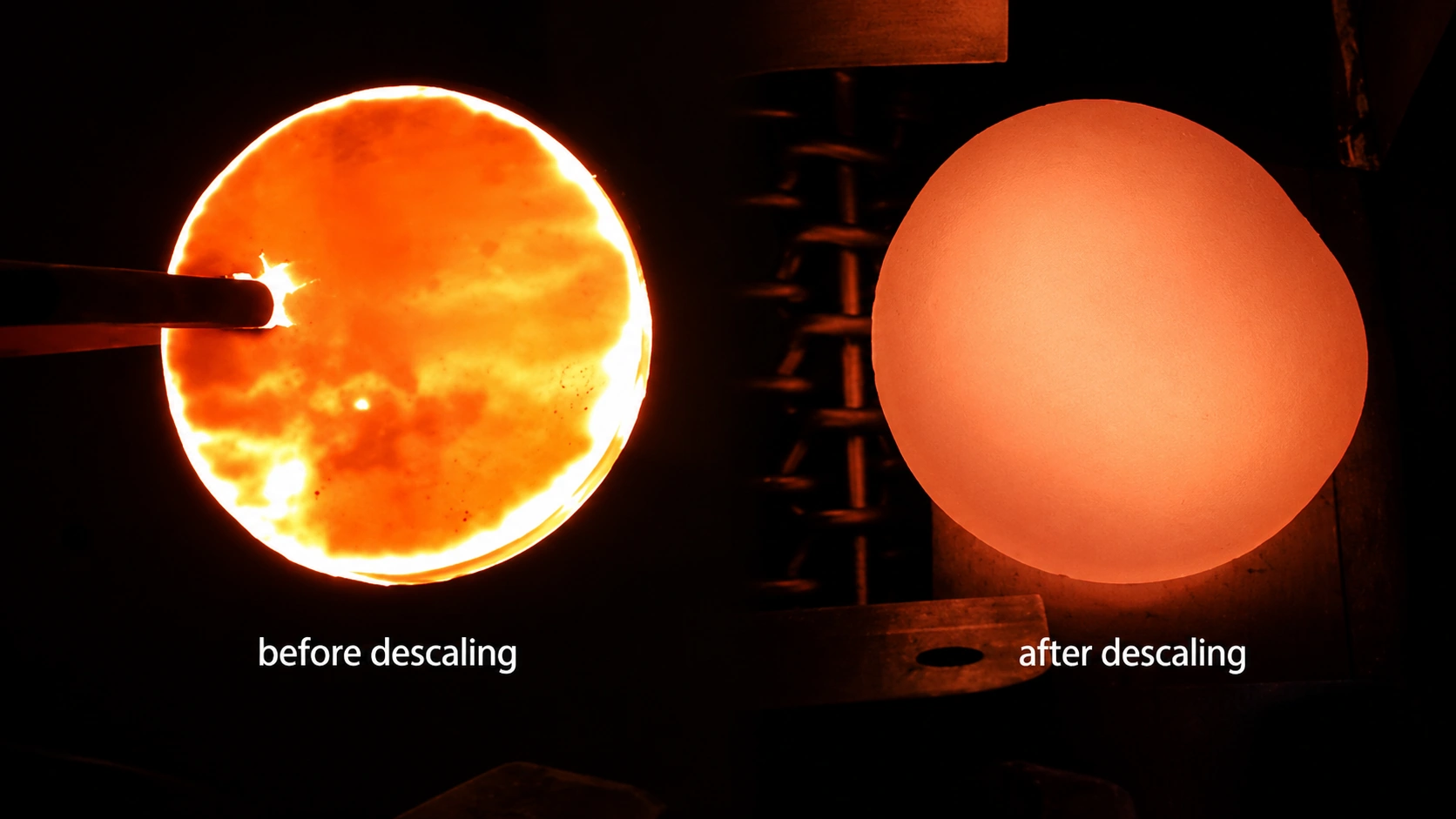
Scale Removal Device For Hot Forging Production

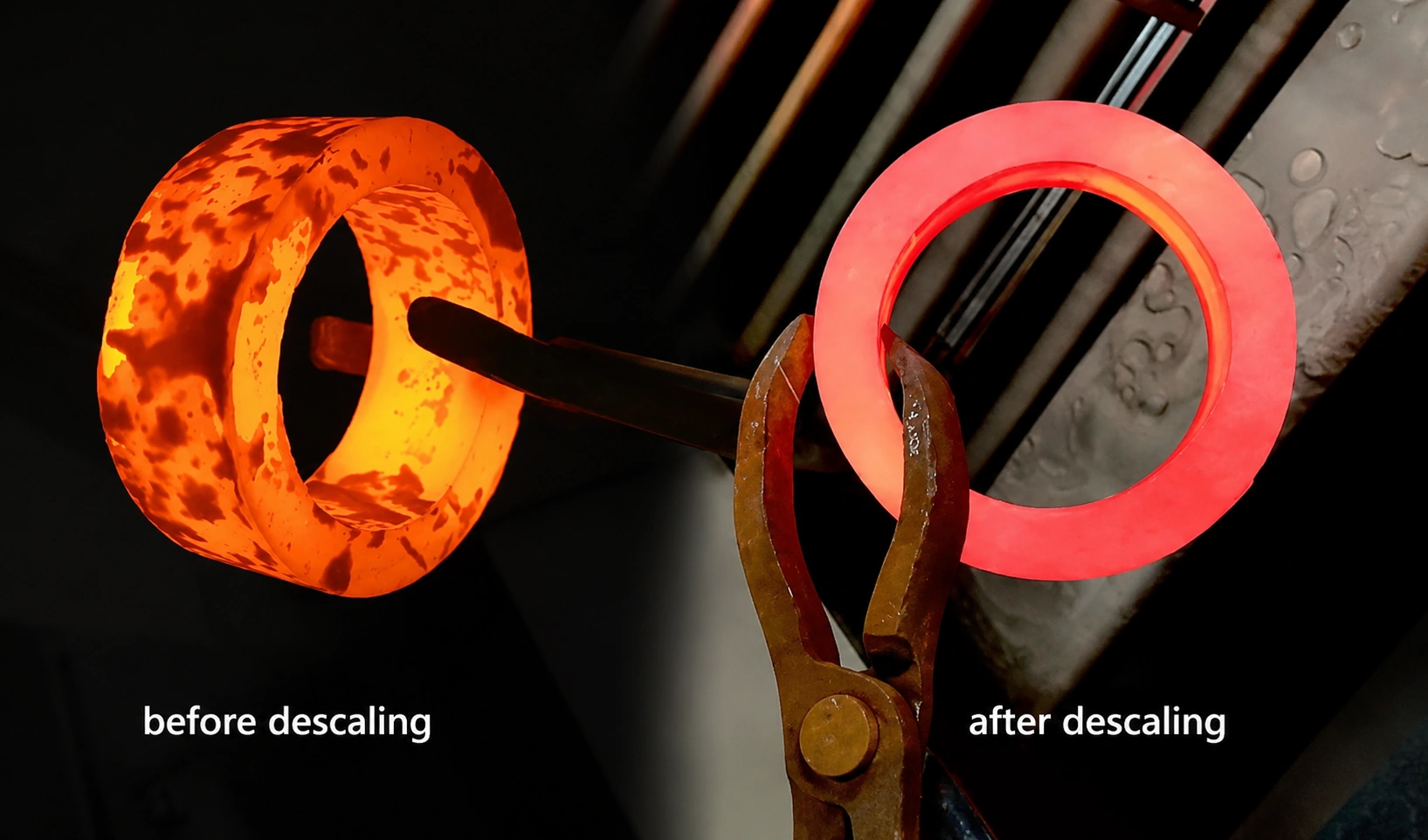
A scale removal device is used in forging production to remove oxide scale from the surface of heated billets, bars and forgings before they enter the press, hammer or die area. During heating, steel reacts with oxygen and forms a hard oxide layer on the billet surface. If this scale is not removed, it can be pressed into the forging surface, causing defects, poor finish, increased die wear and additional machining work.


The WM Series scale removal device is designed for hot billet descaling in forging workshops, including closed die forging, open die forging, precision forging and automatic forging lines. It can be installed between the heating furnace and forging equipment to clean the billet surface before forming.


This equipment is suitable for manufacturers handling round bars, square billets, rectangular billets, gear blanks, shaft blanks, automotive forgings, hardware forgings and other heated metal components.

Why Oxide Scale Removal Matters Before Forging

Oxide scale can look like a small surface problem, but in forging production it can directly affect part quality, die life and downstream machining. When scale is pressed into the forging surface, it may create indentations, surface marks and material loss. For precision forging, this can increase rejection rates and add extra finishing work.

A billet descaling machine helps remove scale before the forging stroke, giving the workpiece a cleaner surface and improving consistency across the production line.
Machine Features

High-Pressure Scale Removal

The machine removes oxide scale from hot billets and forged blanks using controlled pressure and a focused cleaning area. This helps clean the surface quickly before the workpiece enters the forging operation.

Fast Cleaning Cycle

The scale removal process is designed for short cycle times, making it suitable for continuous forging production. It can be matched with induction heating, transfer equipment and forging presses.

Stable Billet Transfer

A suitable conveying or feeding structure helps guide the heated billet through the descaling area. This supports smoother movement from heating to forging.

Adjustable Cleaning Range

The system can be selected according to billet diameter, billet width, billet height and workpiece shape. This helps the machine handle different production requirements.

Nozzle Cleaning Arrangement

Descaling nozzles are arranged to spray the billet surface effectively during transfer. The configuration can be matched to round bar, square billet or shaped forging requirements.

Water Circulation Design

The system can include water tank, filtration and circulation arrangements to support repeated use of water during production and reduce unnecessary waste.

Scale Collection Area

Removed oxide scale can be washed away and collected more easily, helping to improve the workshop environment around the forging line.

Automatic Line Integration

The scale removal device can be integrated with automatic forging lines, induction furnaces, billet feeders, forging presses and related handling equipment.

Compact Workshop Layout

The machine can be selected to suit the available factory space and production direction, making it suitable for both new lines and existing line upgrades.

Suitable Industries

This machine is suitable for forging manufacturers producing:

  • Automotive forged parts
  • Connecting rods and brackets
  • Gears and gear blanks
  • Hand tools and hardware
  • Fasteners and fittings
  • Agricultural machinery parts
  • Engineering machinery components
  • Precision forged metal parts
  • General industrial forged components

Benefits

Better Forging Surface Quality

Removing oxide scale before forming helps reduce surface defects, pits and scale marks on the forged part.

Reduced Die Wear

Cleaner billet surfaces help reduce abrasive scale contact with the die, supporting longer die life and more stable production.

Improved Production Efficiency

Fast descaling before forging helps reduce delays caused by manual scale removal and supports smoother line operation.

Lower Labour Intensity

Operators do not need to rely on manual brushing or repeated physical cleaning, reducing workload during hot forging production.

Reduced Rework And Scrap

Cleaner billets can help reduce surface-related defects, supporting better product qualification rates and less material waste.

Better Downstream Processing

Improved forged surface quality can make later machining, heat treatment or finishing processes easier and more consistent.

Flexible Production Use

The device can be selected for different billet sizes, materials and forging processes, including automotive, hardware and industrial component forging.

Cleaner Workshop Environment

Scale removal and collection can help reduce loose oxide scale around the production area and improve general workshop cleanliness.

Suitable For Automatic Forging Lines

The machine can be connected with heating, feeding, conveying and forging equipment for more continuous production.

Typical Applications

A scale removal device is suitable for many hot forging production lines where oxide scale affects product quality, die life or workshop efficiency.

Typical applications include:

  • Hot billet descaling before forging
  • Closed die forging lines
  • Open die forging lines
  • Precision forging production
  • Automotive part forging
  • Gear blank forging
  • Connecting rod forging
  • Shaft and axle forging
  • Hardware and tool forging
  • Construction machinery component forging
  • Agricultural machinery component forging
  • General steel forging production

Process Flow

1. Billet Heating

The billet or round bar is heated in an induction furnace or other heating system until it reaches the required forging temperature.

2. Scale Formation

During heating, oxide scale forms on the surface of the billet. This must be removed before forging to protect part quality.

3. Billet Transfer

The heated billet moves from the furnace towards the scale removal device by manual handling, conveyor or automatic feeding system.

4. High-Pressure Descaling

The billet passes through the cleaning area, where high-pressure water removes scale from the surface.

5. Scale And Water Separation

Removed scale is washed away and can be collected through the machine structure, filtration or water circulation system.

6. Forging Preparation

The cleaner billet is ready to enter the forging press, hammer or die area for forming.

7. Forging Operation

The workpiece is forged with less surface scale interference, helping improve part quality and die contact.

8. Finished Forging Inspection

The forged component can be inspected for surface quality, dimensional accuracy and production consistency.

9. Line Optimisation

The descaling position, cycle time and transfer method can be adjusted to improve the full forging line flow.

Technical specifications

Note: Final technical parameters should be confirmed according to billet diameter, billet length, billet temperature, production speed, material type, available space and line automation level.

How To Choose The Right Scale Removal Device

Billet Size

Confirm the diameter, width, height and length of the billet or blank. The cleaning chamber and transfer structure must match the workpiece size.

Workpiece Shape

Round bars, square billets and rectangular blanks may need different guide structures or nozzle arrangements for effective cleaning.

Forging Line Speed

The descaling cycle should match the heating and forging rhythm so the machine does not slow down production.

Heating Method

The scale condition can vary depending on whether the billet is heated by induction furnace, gas furnace or other heating equipment.

Required Automation Level

Manual, semi-automatic and automatic feeding arrangements can be considered depending on the existing workshop setup.

Available Workshop Space

The machine layout should be planned according to furnace position, press position, conveyor direction and maintenance space.

Where the Machine Fits in a Forging Line

The scale removal device can be installed between the heating equipment and forging equipment. In many production lines, the billet is heated first, then transferred through the descaling machine before entering the press, hammer or die area.

It can be used with:

  • Induction heating furnaces
  • Gas heating furnaces
  • Billet feeders
  • Forging presses
  • Forging hammers
  • Closed die forging lines
  • Open die forging lines
  • Automatic transfer systems
  • Robotic or mechanical handling systems

For a complete forging line, the scale removal device can also be combined with billet cutting machines, heating systems, die lubrication systems, manipulators, conveyors and finished part handling equipment.

First ever packaging machine questionnaire

Which machine do you need?

Take our quick questionnaire to discover which bagging machine fits your needs. For an exact match and pricing, a detailed quote will be required.

FAQ

What is a scale removal device used for?

A scale removal device is used to remove oxide scale from heated billets, bars and forgings before the forging process. It helps improve surface quality and reduce defects caused by scale being pressed into the part.

Is this the same as a forging descaling machine?

Yes. A scale removal device may also be called a forging descaling machine, billet descaling machine, oxide scale removal machine or hot billet descaler.

Where is the machine installed in the forging line?

It is usually installed after the heating furnace and before the forging press, hammer or die area.

Can it be used for round bars and square billets?

Yes. The machine can be selected according to round bar, square billet, rectangular billet or custom blank requirements.

Does descaling reduce billet temperature?

Any descaling process can create some temperature change, but the system is designed for fast cleaning so the billet can continue quickly to the forging process.

Can it connect with an automatic forging line?

Yes. The scale removal device can be matched with conveyors, feeders, induction heating systems and forging presses for automatic or semi-automatic production.

What industries use this equipment?

It is commonly used in automotive forging, hardware forging, machinery component forging, gear blank forging, shaft forging and general hot forging production.

Can the machine be customised?

Yes. The machine can be configured according to billet size, shape, production speed, water system requirements and workshop layout.

What details are needed before quotation?

The most important details are billet size, billet shape, material, heating method, production speed, forging equipment type and available workshop space.