Compact hydraulic forging power for blacksmiths and workshops
Blacksmith Hydraulic Press
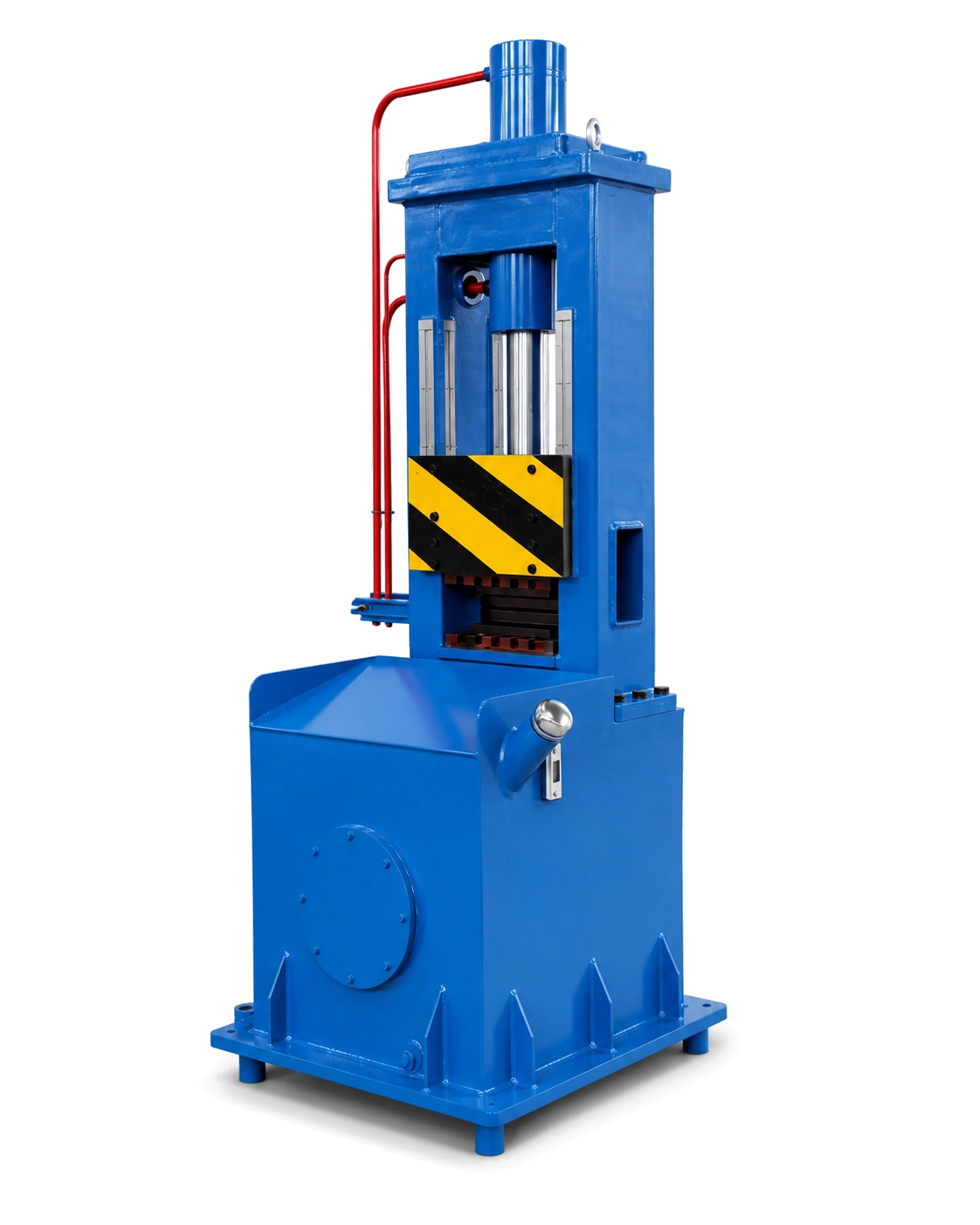
Wiz Machinery supplies blacksmith hydraulic press machines for controlled hot forging, knife making, Damascus billet work, drawing, bending, upsetting and small workshop production.

Blacksmith Hydraulic Press for Controlled Forging Work
A blacksmith hydraulic press provides blacksmiths, bladesmiths, knife makers and small forging workshops with controlled force for hot metal forming. Unlike repeated hammer blows, the hydraulic press applies steady pressure through the ram, giving better control, lower noise and consistent forging force.
Wiz Machinery supplies hydraulic forging press machines for blacksmithing, knife making, tool production and industrial forging. They are suitable for forming heated billets, Damascus steel, tool steel, carbon steel, alloy steel, stainless steel and other forgeable metals.
These blacksmith hydraulic presses are ideal for drawing out, upsetting, bending, flattening, punching, forge welding and general hot forging. With a compact structure and stable hydraulic performance, a blacksmith forging press is an excellent alternative or complement to a power hammer.
Why Choose a Hydraulic Press for Blacksmithing?
A hydraulic press gives the operator strong forming force with smooth movement and precise control. For blacksmithing and bladesmithing, this is especially useful when working on billets, layered steel, tool blanks, hardware components and repeatable forging tasks.
Compared with manual forging, a hydraulic press for blacksmithing can reduce labour intensity and improve consistency. Compared with hammer-based forging, it offers slower, more controlled pressure application, which is useful for operations where accuracy and steady compression are more important than impact speed.
Features
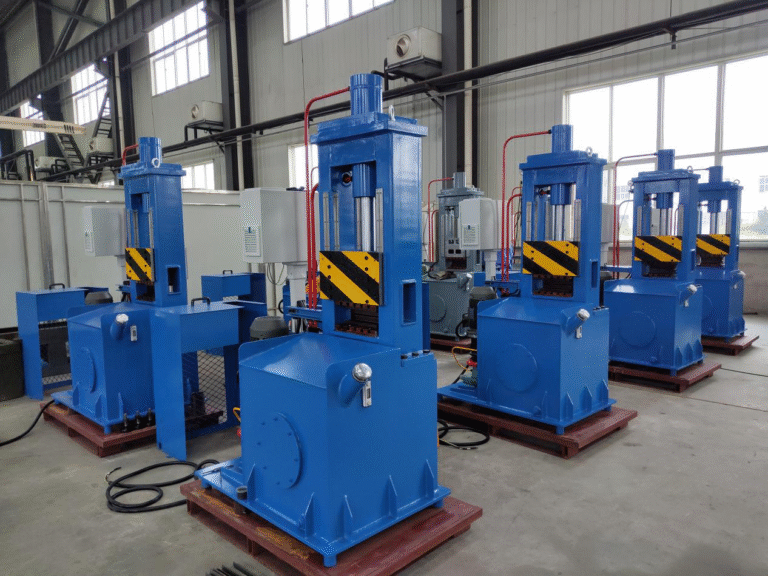
Controlled Hydraulic Pressing Force
Compact Workshop Structure
Heavy-Duty Steel Frame
Practical Working Table
Smooth Ram Movement
Suitable Model Range
Applications
The blacksmith hydraulic press is suitable for knife making and bladesmithing, where controlled pressure is needed for drawing out billets, flattening steel, forming knife blanks and working with layered materials. For Damascus steel production, the steady hydraulic pressing action helps compress pattern-welded billets with better control than repeated manual hammering.
In general blacksmith forging, the machine can be used for upsetting, bending, fullering, flattening, shaping and forming heated metal stock. It is a practical choice for workshops producing custom forged items, repair parts, decorative metalwork and functional components where repeatability and control are important.
The press is also suitable for small tool and hardware production, including brackets, fittings, agricultural repair parts, workshop tools and small forged components. With the right tooling, it can support straightening, sizing and pressing operations, making it useful for both one-off blacksmith work and small-batch production.
Key Benefits
Better Control During Forging
Reduced Manual Labour
Lower Impact Noise
Consistent Forging Results
Flexible Tooling Options
Suitable for Small Production
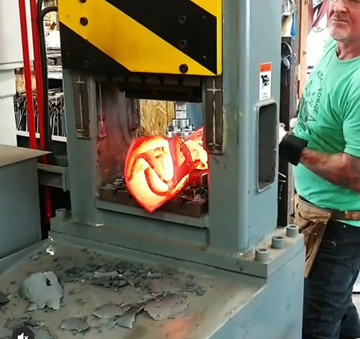
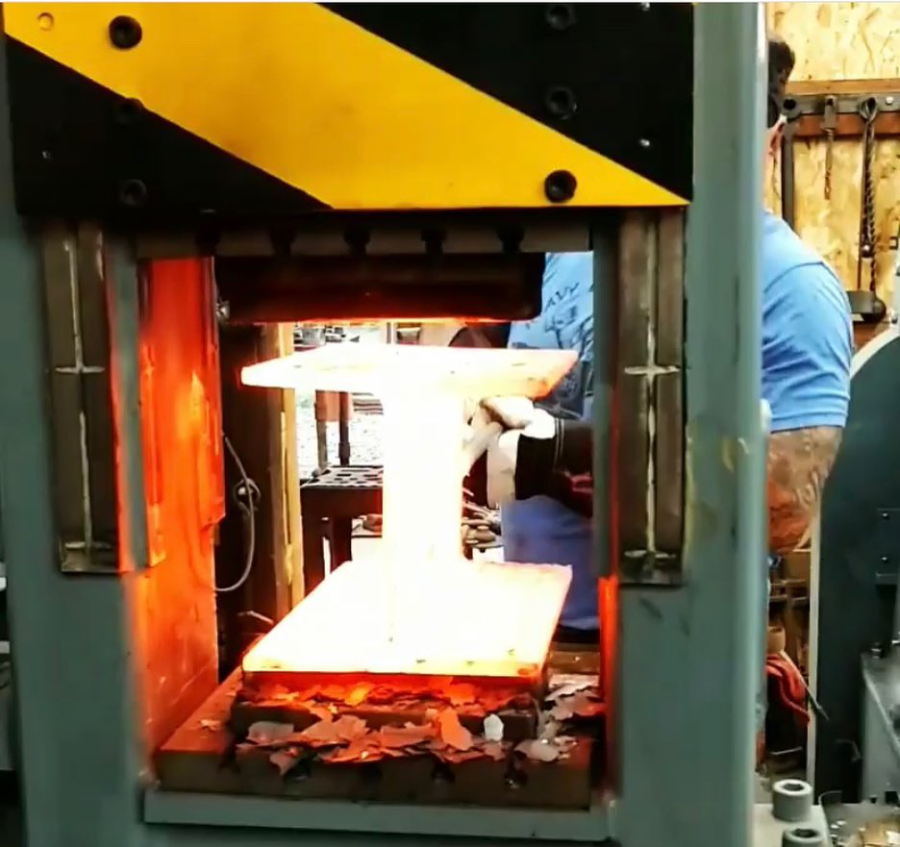
Process flow
1. Heat the Material
2. Position the Workpiece
3. Apply Hydraulic Pressure
4. Reposition the Material
5. Repeat Forging Passes
6. Finish and Inspect
Technical specifications
| Specification | Unit | WM-25 | WM-50 | WM-150 |
|---|---|---|---|---|
| Normal Force | T | 25 | 50 | 150 |
| Working Speed | mm/s | ≤20 | ≤20 | ≤15 |
| Stroke Speed - Down | mm/s | ≥40 | ≥50 | ≥150 |
| Stroke Speed - Up | mm/s | ≥60 | ≥55 | ≥100 |
| Maximum Working Area | mm | 300 × 400 | 380 × 400 | 600 × 600 |
| Worktable Size | mm | 300 × 200 | 380 × 300 | 600 × 400 |
| Worktable Height | mm | 900 ± 20 | 900 ± 20 | 700 ± 20 |
| Hydraulic Oil Volume | L | 240 | 450 | 450 |
| Recommended Hydraulic Oil | - | Anti-wear hydraulic oil YB-N46 | Anti-wear hydraulic oil YB-N46 | Anti-wear hydraulic oil YB-N46 |
| Motor Power | kW | 4 | 7.5 | 30 |
| Overall Size | mm | 1200 × 765 × 2080 | 1500 × 1110 × 2140 | 2850 × 1600 × 4080 |
| Machine Weight | kg | 860 | 1855 | 9000 |
| Application Scope | Forging Process: Hot forging, free forging, drawing out, upsetting, bending, flattening, punching, forge welding, straightening and sizing Suitable Users: Blacksmiths, bladesmiths, knife makers, repair workshops, training workshops and small forging production facilities Typical Products: Knife blanks, Damascus billets, tools, hardware parts, brackets, fittings, small forged components and workshop repair parts | |||
| Note | The above blacksmith hydraulic press technical parameters are for reference only. Final specifications may vary depending on machine configuration, tooling, material size, voltage, hydraulic system design, workshop layout and project requirements. | |||
For accurate model selection, please send your workpiece size, material, forging temperature, required process and expected production output. Wiz Machinery can help match the hammer capacity to your application.
Machine Selection Guidance
The WM-25 blacksmith hydraulic press is a practical choice for smaller workshops, knife makers, bladesmiths and general blacksmithing users who need a compact machine for controlled forging work. With 25T normal force, it is suitable for drawing out, flattening, bending, small billet work, Damascus steel forging and everyday workshop pressing tasks where space and power consumption need to be kept manageable.
The WM-50 blacksmith hydraulic press is suitable for users who need more pressing force, a larger working area and stronger performance for regular workshop production. This model is a good option for heavier blacksmith forging, larger billets, tool making, hardware parts and more frequent hot forging work. For many workshops, the WM-50 offers a strong balance between compact size, usable force and practical production capacity.
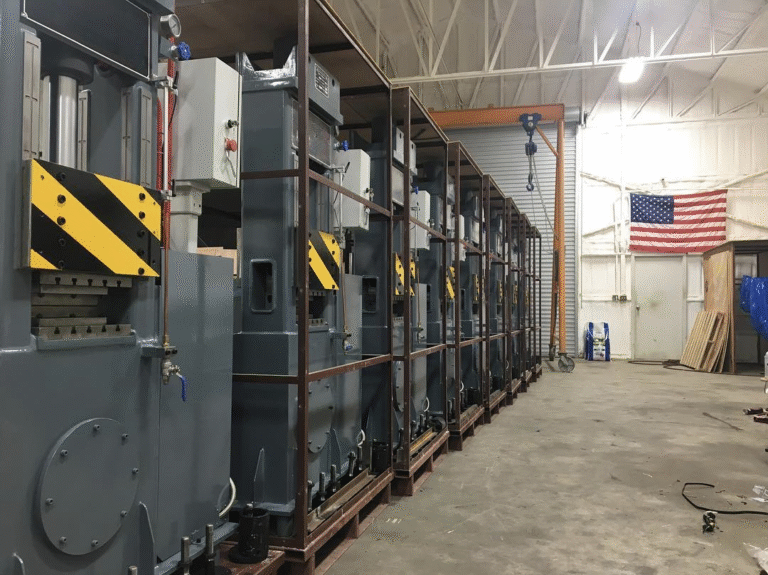
The WM-150 blacksmith hydraulic press is designed for heavier-duty forging requirements, larger workpieces and more demanding forming applications. It is suitable for workshops that need stronger hydraulic pressure for larger billets, bigger forged components, heavier tooling and more intensive small industrial forging work. This model is best suited when the application requires higher force, larger table size and a more robust machine structure.
Blacksmith Hydraulic Press vs Power Hammer
A blacksmith hydraulic press and a power hammer are both useful forging machines, but they serve different purposes. A power hammer delivers repeated impact blows, which is useful for fast drawing and traditional hammer forging. A hydraulic press applies controlled pressure, which is useful for billet compression, forge welding, bending and precise forming.
Many workshops use both machines together: the power hammer for fast shaping and the hydraulic press for controlled compression and finishing operations. If your work involves Damascus billets, knife making, controlled flattening or repeated forming pressure, a hydraulic forging press for blacksmithing can be an important addition to the workshop.
Suitable Forging Work
Drawing Out
Upsetting
Bending
Flattening
Forge Welding
Sizing and Straightening
Optional Tooling and Configuration
Different blacksmithing jobs need different dies and tools. Wiz Machinery can help match the press configuration to your workshop process.
Flat Dies
Used for flattening, drawing, forge welding and general pressing work.
Drawing Dies
Used to draw out billets and bars more efficiently than flat dies alone.
Bending Tools
Used for controlled bending of heated bar, flat stock and shaped metal.
Punching Tools
Used for forming holes or preparing specific forged features where the process allows.
Custom Tooling
Tooling can be designed around your typical workpiece shape, material and forging requirement.
Voltage Configuration
Machine electrical configuration can be reviewed according to your factory power supply before order confirmation.
First ever packaging machine questionnaire
Which machine do you need?
Take our quick questionnaire to discover which machine fits your needs. For an exact match and pricing, a detailed quote will be required.