How a CNC Hydraulic Closed Die Forging Hammer Works
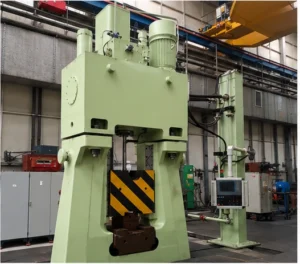
A CNC hydraulic closed die forging hammer is used to shape heated billets inside closed forging dies. The process combines hydraulic impact force, CNC control and die design to produce strong and repeatable forged parts.
Step 1: Billet Heating
The billet is heated to the correct forging temperature using an induction heating furnace, gas furnace or other heating equipment. Proper heating helps improve material flow and die filling.
Step 2: Billet Loading
The heated billet is placed into the lower die manually, by manipulator or by robot. Accurate loading is important for stable closed die forging and repeatable part quality.
Step 3: Die Positioning
The upper and lower dies form the required part shape. The die cavity controls how the heated metal flows during forging.
Step 4: CNC-Controlled Striking
The CNC hydraulic forging hammer delivers controlled impact energy. Strike energy can be adjusted according to part shape, material, billet size and forging stage.
Step 5: Final Forming
The hammer applies final forming blows to complete the forged shape. This helps the material fill the die cavity and achieve the required geometry.
Step 6: Trimming and Cooling
After forging, excess flash may be removed using a trimming press. The forged part is then cooled and inspected.
Contact us to learn how the CNC Hydraulic Closed Die Forging Hammer fits your industry.