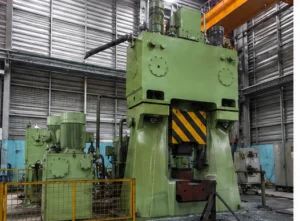
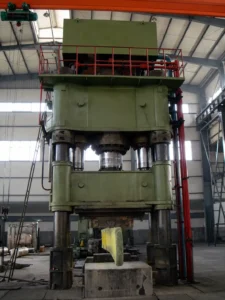
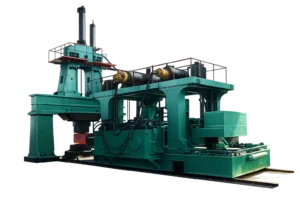
white power hammer

Pneumatic Forging Hammer Dies and Tooling Explained

The right tooling can improve the performance of a pneumatic forging hammer and help operators complete different forging processes more efficiently.

Why Tooling Matters

A power hammer depends on suitable dies and tools to shape heated metal correctly. Tooling affects forming speed, surface quality, control and repeatability.

Flat Dies

For many open die forging applications, flat dies are the most common option. Flat dies are used for general shaping, flattening, drawing and forming heated metal.

Drawing Dies

Drawing dies help reduce the cross-section of heated bars or billets and increase their length. They are useful for drawing-out operations and elongated forged components.

Fullering Tools

Fullering tools are used to create grooves, transitions and local reductions. They can be useful for tool making, shaft transitions and shaped reductions.

Cutting and Punching Tools

Cutting tools and hot cutting dies are used to separate heated bars, billets or forged sections. Punching tools are used to create holes or openings in hot metal.

Bending Tools

Bending tools can help form hooks, brackets, rings, curves and shaped profiles.

Some applications may use custom top and bottom dies for repeated production of specific forged shapes. However, a pneumatic forging hammer is mainly suitable for open die and free forging. For complex precision parts, a forging press or closed die forging machine may be better.

Wiz Machinery can help discuss suitable dies and tooling for your power hammer based on your workpiece and forging process.

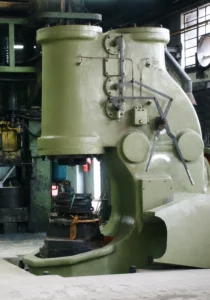
Contact us to learn how the Pneumatic Forging Hammer fits your industry.

Featured Thinking

Pneumatic Forging Hammer Dies and Tooling Explained

Electric Screw Press vs Friction Press

How to Choose the Right Pneumatic Forging Hammer