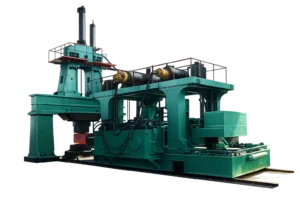
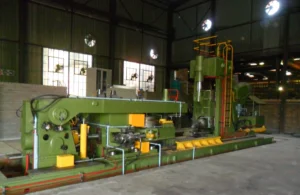
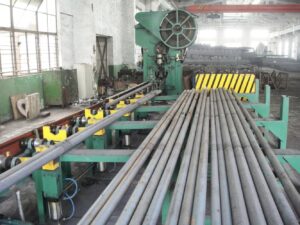
Horizontal Ring Rolling Machine Buying Guide

A horizontal ring rolling machine is an important piece of forging equipment used to produce seamless forged rings, flange rings, bearing rings, gear rings, wind power flanges and other large circular components. For many forging plants, choosing the correct ring rolling machine can directly affect production efficiency, ring accuracy, material usage and long-term production cost.

Unlike general forging equipment, a CNC horizontal ring rolling machine must be selected according to the size, material and forming requirements of the ring products being produced. The correct machine is not always the largest model. The best choice depends on the required ring outer diameter, inner diameter, height, wall thickness, production volume, material grade and automation level.

This buying guide explains the main factors to consider before purchasing a horizontal ring rolling machine.

What Is a Horizontal Ring Rolling Machine?

A horizontal ring rolling machine forms a heated ring blank into a larger seamless ring through radial and axial rolling. During the process, the ring diameter increases while the wall thickness and height are controlled by the rolling tools.

The horizontal structure is commonly used for medium, large and heavy ring forgings because it provides strong workpiece support and stable forming conditions. This makes it suitable for producing large flanges, wind power rings, bearing rings, gear blanks and heavy industrial ring forgings.

A CNC horizontal ring rolling machine can improve repeatability by controlling the rolling process through programmed parameters. This helps reduce manual dependency and supports more consistent production.

Key Factors When Choosing a Horizontal Ring Rolling Machine

1. Ring Outer Diameter

The first factor to confirm is the required ring outer diameter range. Every machine has a minimum and maximum rolling diameter. If your factory produces different ring sizes, the selected machine should cover both current products and possible future orders.

For example, a flange manufacturer may need one machine for several flange sizes, while a wind power component supplier may need a larger machine for very large diameter rings.

2. Ring Height

Ring height is another important selection factor. The machine must have enough axial rolling capacity and roller spacing to control the required ring height. Taller rings need more stable support and stronger axial control during the rolling process.

If the machine is too small for the required height, the ring may not form correctly or production stability may be affected.

3. Wall Thickness

Finished wall thickness affects rolling force, tooling design and process control. Thick-wall rings usually require higher forming force, while thin-wall rings may require more precise control to avoid distortion.

When selecting a CNC ring rolling machine, always provide the finished wall thickness and the starting blank dimensions.

4. Material Grade

Different materials require different forming force and heating conditions. Carbon steel, alloy steel, stainless steel, aluminium alloy, copper alloy and titanium alloy all behave differently during hot ring rolling.

A machine suitable for carbon steel may not always be suitable for stronger alloy materials. The machine supplier should review the material grade before recommending a model.

5. Radial and Axial Rolling Force

Radial rolling force controls ring diameter expansion and wall thickness reduction. Axial rolling force helps control ring height and end-face quality.

For heavy rings, large flanges and high-strength materials, sufficient radial and axial rolling force is essential. If the rolling force is too low, the machine may struggle to form the ring efficiently.

6. CNC Control and Automation

A CNC horizontal ring rolling machine can improve production consistency by controlling key rolling parameters. Depending on the project, automation options may include measurement systems, hydraulic control, feeding systems, ring manipulators and integrated production line support.

For factories producing regular batches, CNC control can help improve repeatability and reduce operator variation.

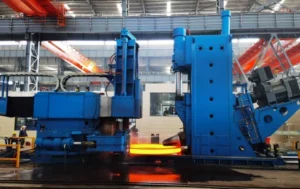
Common Products Made by Horizontal Ring Rolling Machines

Horizontal ring rolling machines are widely used for manufacturing:

Flange rings
Welding neck flanges
Bearing rings
Gear rings
Slewing rings
Wind power flanges
Wheel hubs
Thin-wall cylinders
Petrochemical rings
Aerospace ring forgings
Heavy machinery rings
Large seamless forged rings

These products are used in industries such as oil and gas, petrochemical, wind power, shipbuilding, aerospace, engineering machinery, automotive manufacturing and heavy equipment production.

Why Machine Selection Matters

Choosing the wrong ring rolling machine can lead to production problems, including limited ring size capability, poor dimensional control, low efficiency or difficulty processing certain materials.

A machine that is too small may not have enough force or capacity. A machine that is too large may increase investment cost, floor space requirement and operating cost unnecessarily.

The best solution is to match the machine to your real production needs, while allowing reasonable capacity for future growth.

Conclusion

A horizontal ring rolling machine is a major investment for forged ring production. The correct machine should be selected according to ring size, material, rolling force, production volume and automation requirements.

Wiz Machinery helps customers source CNC horizontal ring rolling machines for flanges, bearing rings, gear rings, wind power components and large seamless forged rings. By reviewing your ring drawings and production requirements, we can help recommend a suitable machine configuration for your project.

Contact us to learn how the CNC Ring Rolling Machine fits your industry.

Featured Thinking

Reduce Labour with Forging Manipulators

Horizontal Ring Rolling Machine Buying Guide

Billet Cutting Machine for Forging Lines | Complete Guide