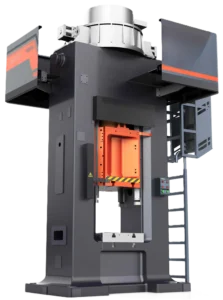
Choosing the right electric screw press is important for forging quality, production efficiency and long-term machine performance. The correct model depends on your part, material, billet size, die design and production target.
The first step is to review the forging part drawing. The shape, size, weight and tolerance of the part will influence the required press capacity and energy. A small hardware component may need a different press from an automotive control arm or aluminium alloy forging.
The second factor is material. Steel, aluminium alloy, brass, copper and titanium alloy can require different forging temperatures and forming conditions. The electric screw press should be selected according to the material’s forging behaviour.
The third factor is billet size and weight. The machine must have enough forming energy and die space to handle the workpiece. Press stroke, table size, slide size and opening height should also be checked.
The fourth factor is production output. If you only need lower-volume production, a standalone electric screw press may be enough. For higher output, you may need an automated forging line with induction heating, robot loading, die lubrication, trimming press and cooling systems.
The fifth factor is the forging process. Some products may require preforming, final forging, sizing, coining or calibration. Understanding the full process helps choose the correct machine and auxiliary equipment.
Before buying an electric screw press, prepare the following information:
• Part drawing or photo
• Material grade
• Billet size and weight
• Required production capacity
• Forging temperature
• Die information
• Manual or automatic operation requirement
• Factory voltage and installation country