Blog
Radial Axial Ring Rolling Machine Explained
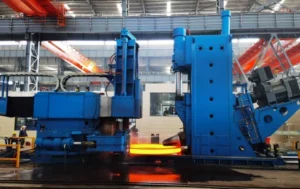
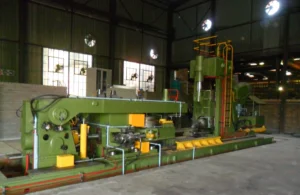
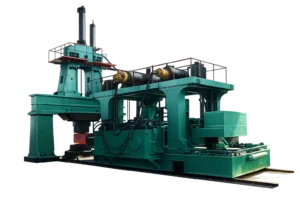
A radial axial ring rolling machine is used to produce seamless forged rings by controlling both the radial and axial dimensions of a heated ring blank. This type of machine is widely used in forged ring production for flanges, bearing rings, gear rings, wind power flanges, petrochemical rings and heavy machinery components.
The main advantage of radial axial ring rolling is that it can control the ring diameter, wall thickness and height during the same forming process. This makes it suitable for producing large and accurate seamless rings with improved material utilisation.
What Does Radial Axial Ring Rolling Mean?
In ring rolling, “radial” refers to the direction from the centre of the ring outward. Radial rolling controls the ring diameter and wall thickness.
“Axial” refers to the direction along the height of the ring. Axial rolling helps control the ring height and end-face shape.
A radial axial ring rolling machine uses both systems together. As the ring rotates, radial pressure expands the diameter while axial pressure helps maintain the height and shape of the ring.
How the Ring Rolling Process Works
The process usually starts with a billet or forged blank. The material is heated to the required forging temperature and then pierced or preformed into a ring blank. This blank is placed into the ring rolling machine.
During rolling, the ring rotates between the main roll, mandrel roll and axial rolls. The radial rolling force reduces wall thickness and expands the outer diameter. At the same time, the axial rolling system controls the height of the ring.
The process continues until the ring reaches the required size.
Why Use Radial and Axial Rolling Together?
Radial rolling alone is useful for increasing ring diameter and reducing wall thickness. However, for many industrial rings, height control is also important. Without axial control, the ring may not meet the required dimensional tolerance or end-face quality.
Radial axial ring rolling gives better control over the full ring shape. This is especially important for larger rings, heavy-duty flanges, bearing rings and precision ring blanks that require stable dimensions before machining.
Main Advantages of Radial Axial Ring Rolling
1. Better Dimensional Control
The combination of radial and axial rolling helps control outer diameter, wall thickness and height. This supports more consistent ring geometry and can reduce machining allowance.
2. Improved Material Utilisation
Ring rolling forms the material close to the required shape. This helps reduce waste compared with cutting rings from plate, block or solid material.
3. Suitable for Large Ring Production
Radial axial ring rolling machines are commonly used for large forged rings, including wind power flanges, large bearing rings and heavy industrial components.
4. Stronger Production Efficiency
The process can produce ring blanks more efficiently than many traditional forming or machining methods. This is especially useful for manufacturers producing ring products in regular batches.
5. Seamless Ring Quality
Because the ring is formed from a continuous forged blank, there is no welded joint. This makes seamless ring rolling suitable for demanding industrial applications.
6. Flexible Product Range
A suitable machine can produce different ring sizes within its capacity range, making it useful for forging plants that serve multiple industries.

Products Made by Radial Axial Ring Rolling Machines
Radial axial ring rolling machines can be used to produce:
Flange rings
Bearing rings
Gear rings
Slewing rings
Wind turbine flanges
Welding neck flanges
Wheel hubs
Thin-wall cylinders
Petrochemical rings
Aerospace ring forgings
Pressure vessel rings
Heavy machinery rings
These products are used across many sectors, including energy, oil and gas, shipbuilding, aerospace, engineering machinery and general industrial manufacturing.
Suitable Materials
Depending on machine capacity and tooling design, radial axial ring rolling machines can process many forgeable metals, including:
Carbon steel
Alloy steel
Stainless steel
Aluminium alloy
Copper alloy
Titanium alloy
High-temperature alloy
The correct machine model should be selected according to material strength, ring size and required rolling force.
CNC Control in Radial Axial Ring Rolling
Modern CNC radial axial ring rolling machines use control systems to help manage the rolling process. CNC control can improve repeatability, reduce operator dependency and support more stable production.
For manufacturers producing different ring sizes, CNC control can also make product changeover easier when the correct parameters and tooling are prepared.
Conclusion
A radial axial ring rolling machine is a key solution for producing seamless forged rings with controlled diameter, height and wall thickness. It is widely used for flanges, bearings, gears, wind power rings, petrochemical rings and heavy industrial components.
Wiz Machinery can help customers source CNC radial axial horizontal ring rolling machines according to ring size, material and production requirements.
Contact us to learn how the CNC Ring Rolling Machine fits your industry.
Featured Thinking
Blog Request a quotation Find out More Reduce Labour with Forging Manipulators Open die forging involves hot, heavy and difficult-to-handle workpieces. A CNC forging manipulator helps reduce manual labour by controlling the billet during clamping, lifting, rotation and feeding. Instead of relying on manual handling near the hot forging area, operators can control the manipulator […]
Blog Request a quotation Find out More Horizontal Ring Rolling Machine Buying Guide A horizontal ring rolling machine is an important piece of forging equipment used to produce seamless forged rings, flange rings, bearing rings, gear rings, wind power flanges and other large circular components. For many forging plants, choosing the correct ring rolling machine […]